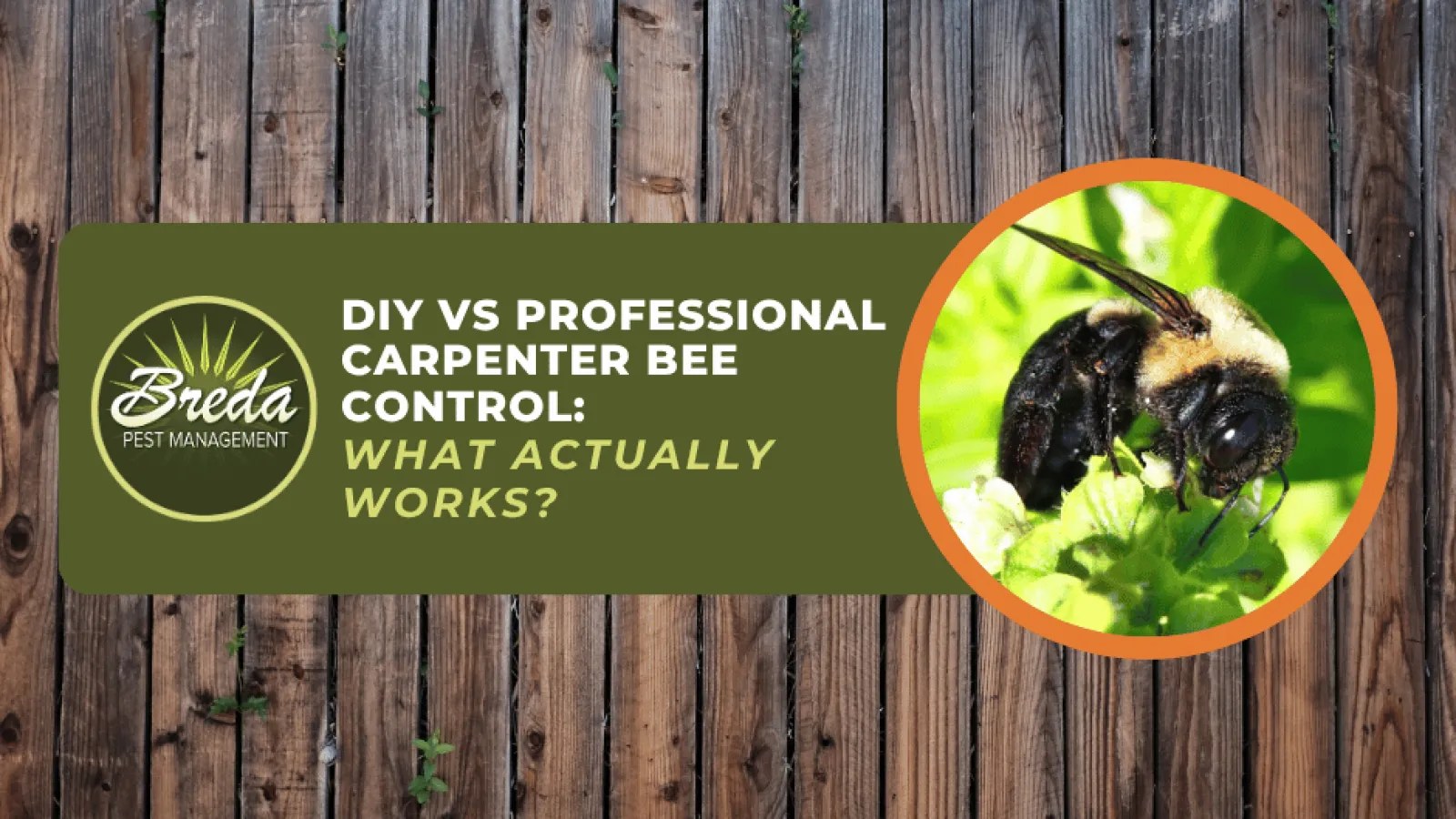
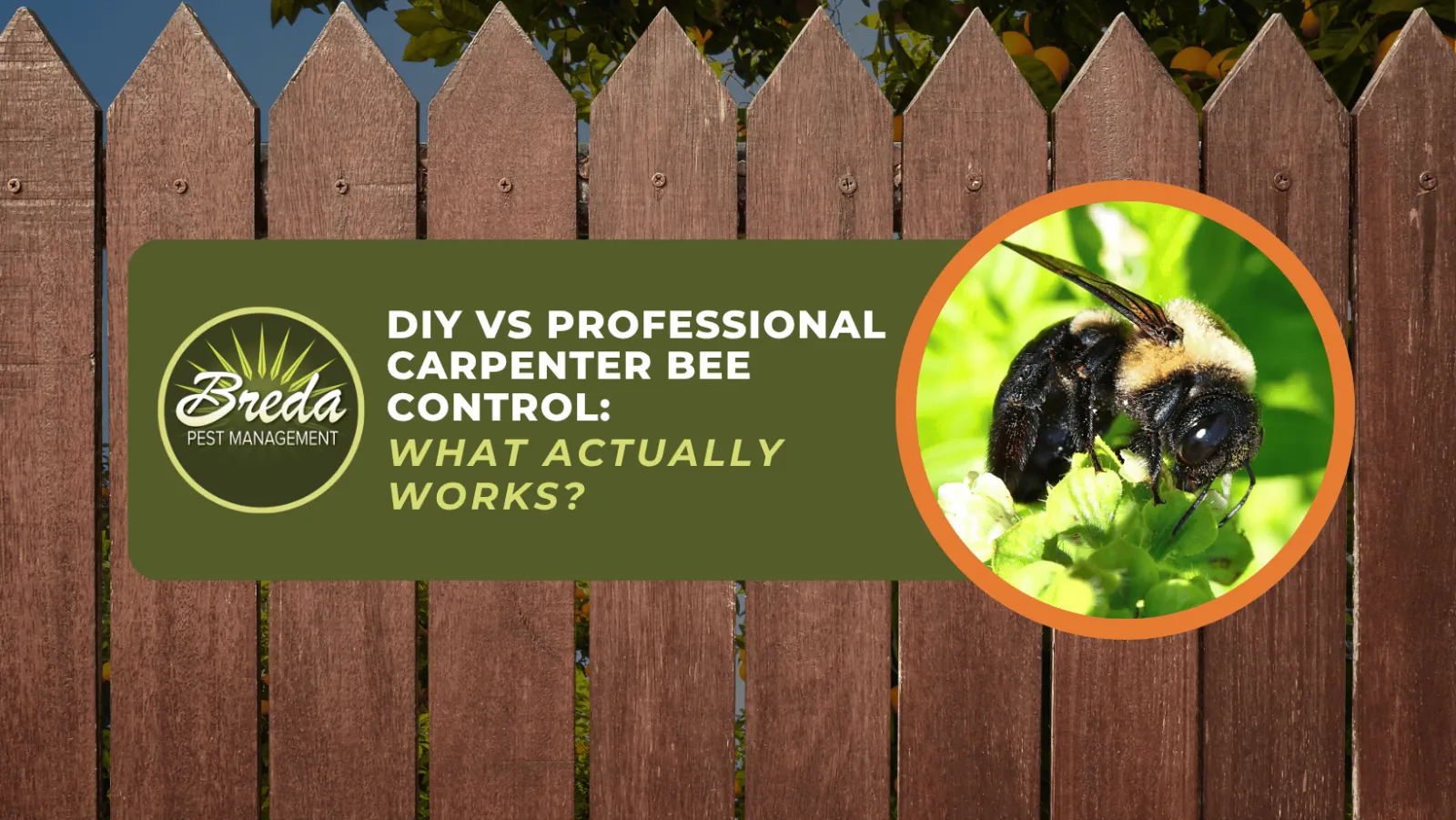
There are few things that make a homeowner stop mid-scroll through their weekend to-do list quite like seeing a large bee hovering near the deck. And not just hovering. Patrolling. Guarding. Acting like your porch is suddenly under new management.
If you live in Georgia, especially around Metro Atlanta, there's a good chance that the bold little flyer is a carpenter bee. And once you notice one, it's natural to start wondering what you can do about it yourself and when it's time to call in a professional.
Because yes, DIY carpenter bee control Georgia homeowners try themselves can help in some situations. But it has limits and when carpenter bees have already started boring into wood, the problem can get more complicated than one small round hole makes it seem.
So let's talk honestly about DIY vs. professional carpenter bee prevention Atlanta GA homeowners can trust, what actually works, and when it's time to stop wishful thinking and call BREDA Pest Management.
First, Why Carpenter Bees Are A Dilemma
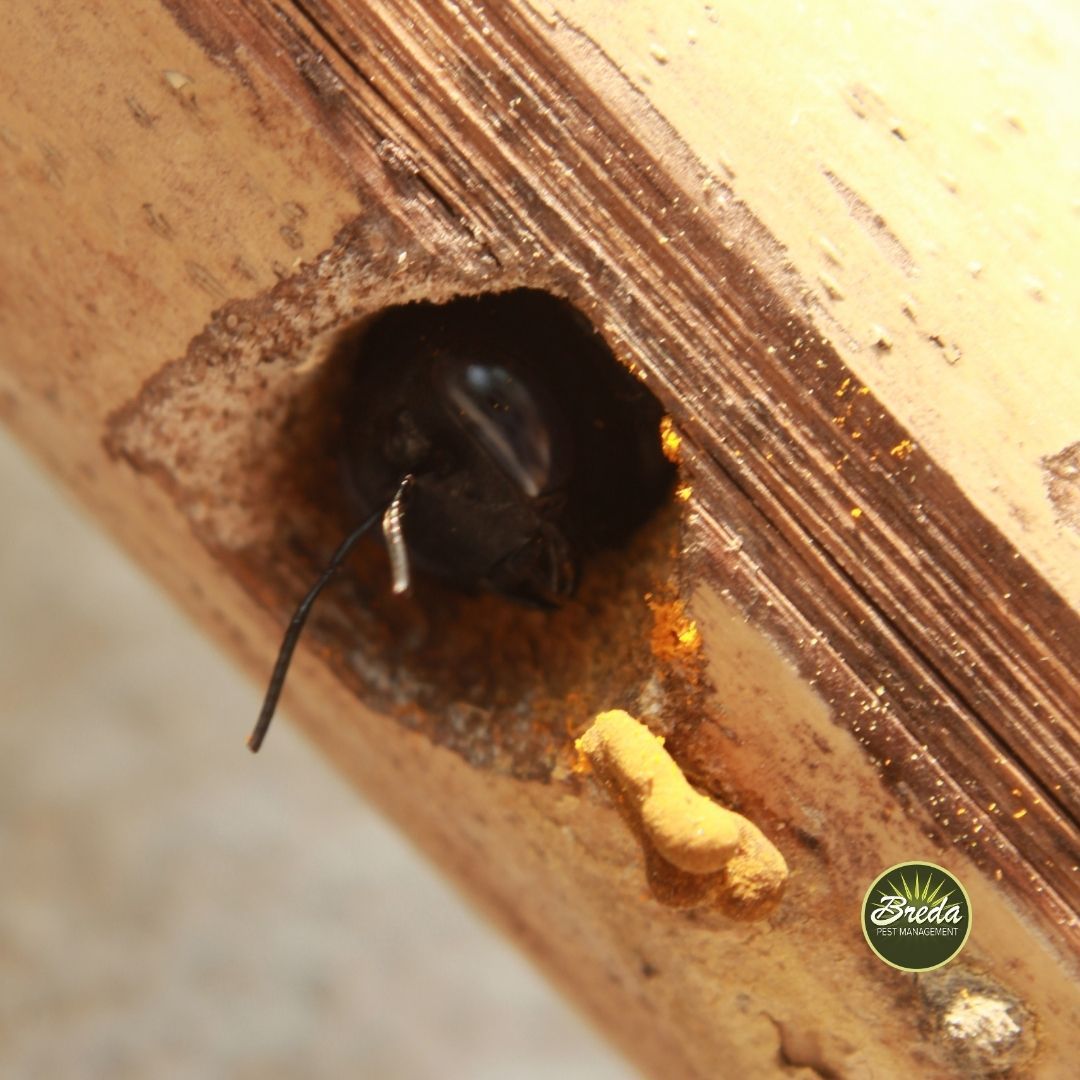
Carpenter bees aren't like termites. They don't eat wood. They drill into it to create nesting tunnels where females lay eggs and stock the tunnel with pollen for the larvae.
That's the fun fact. They aren't eating your deck.
The less fun fact? They are still damaging it.
According to Purdue Extension, carpenter bees excavate tunnels in wood to rear their young, and those tunnels should be properly treated before they are sealed to discourage future use.
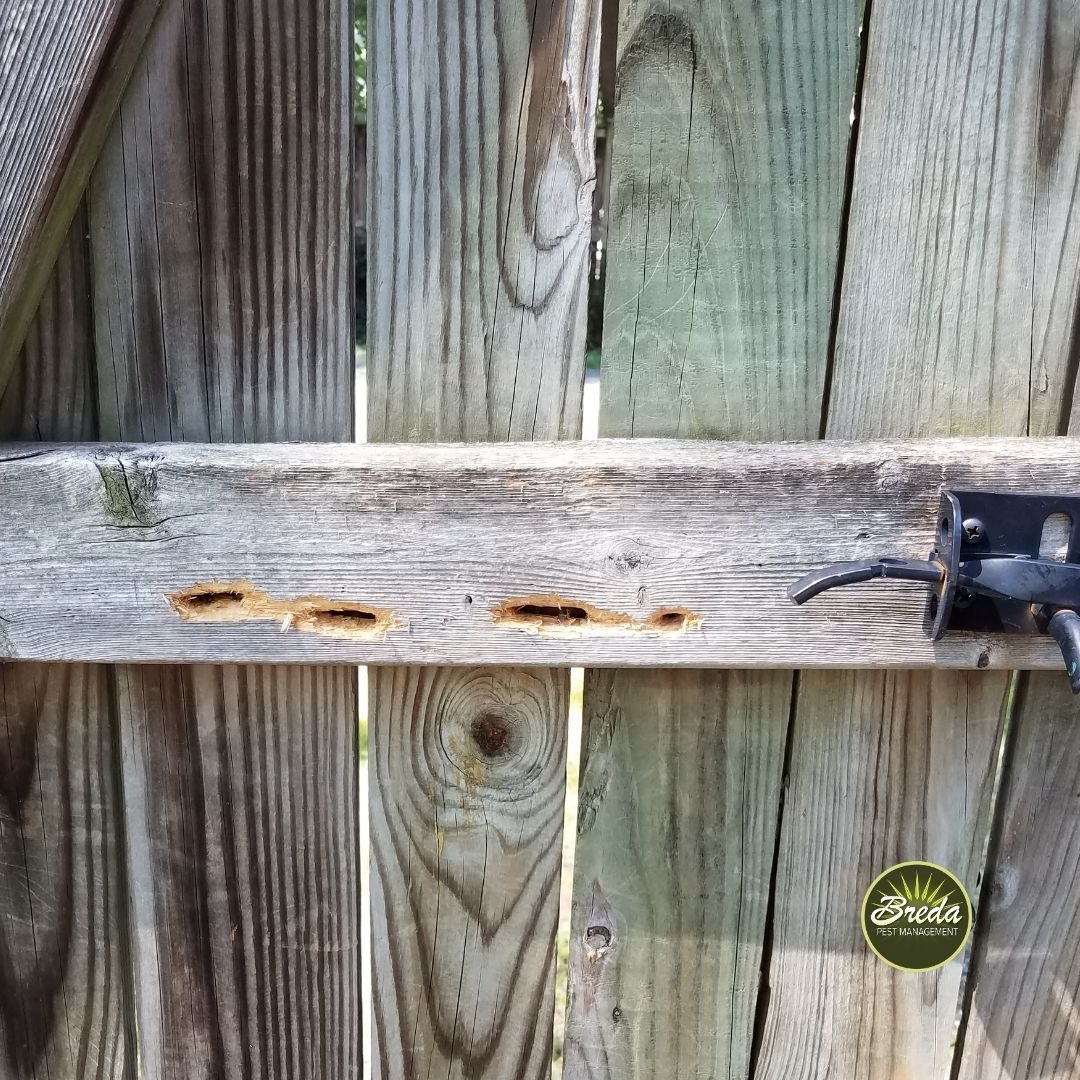
Female carpenter bees usually begin by drilling a round entry hole into exposed wood. From the outside, it may look small. Neat, even. Almost like someone used a drill bit and forgot to tell you.
But inside the wood, the tunnel may be much longer. Female carpenter bees often drill tunnels several inches deep, and when they reuse old tunnels year after year, the gallery system can expand and branch. Over time, that hidden internal damage can weaken wood, invite moisture into abandoned holes, and create conditions for wood rot.
This is why carpenter bee damage Georgia homes experience can become more than a cosmetic issue. What starts as "just one little hole" can turn into a recurring spring problem.
When DIY Carpenter Bee Control Can Help
DIY carpenter bee control is most useful when you catch the issue early, before bees have fully established tunnels.
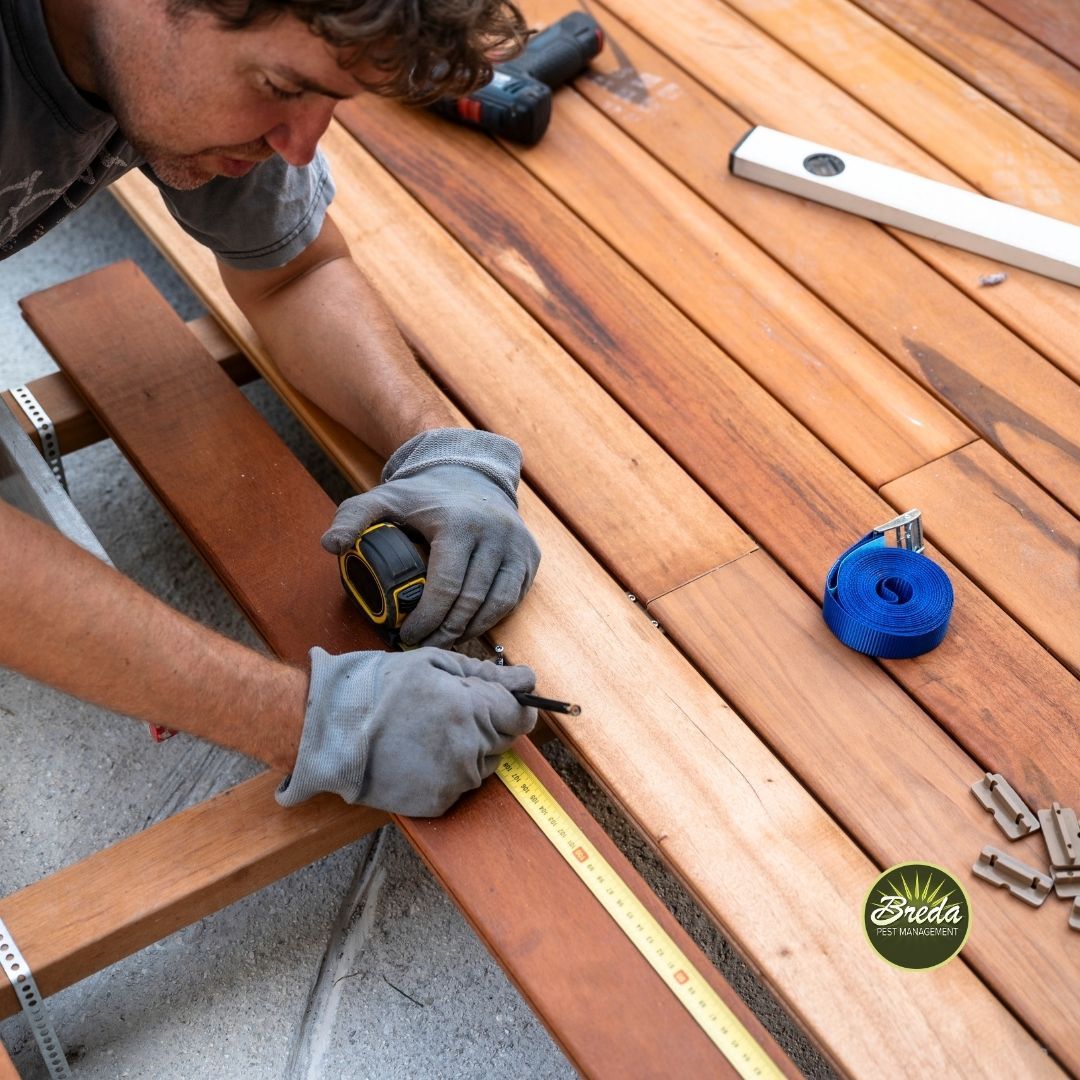
If carpenter bees are only starting to investigate your home, prevention can go a long way. Carpenter bees prefer untreated, unpainted, weathered, or exposed wood, so one of the strongest homeowner prevention steps is painting or sealing vulnerable wood surfaces.
The University of California Integrated Pest Management program notes that carpenter bees often select sound, undecayed wood without paint or bark for nesting, and they can damage wooden structures by boring into timbers and siding. (UC IPM)
That means DIY prevention is really about making your home less attractive before nesting begins.
Good DIY prevention steps include:
- Painting or sealing exposed wood
- Replacing damaged or weathered wood
- Covering vulnerable wood with vinyl, metal, or treated lumber
- Inspecting decks, fences, fascia boards, eaves, and outdoor furniture in spring
- Watching for hovering bees before holes appear
Surface sprays, traps, and repellents may temporarily reduce activity, but they usually work best when carpenter bees are just exploring an area. Outdoors, many repellents and surface products have limited residual effectiveness because sunlight, rain, and humidity break them down.
In other words, DIY can help when the bees are thinking about moving in. It's much less reliable, however, once they've already signed the lease.
When DIY Is Not Enough
The problem with carpenter bees is that the visible hole isn't the whole story.
If you're seeing carpenter bees drilling holes in wood Atlanta homeowners commonly find around decks, eaves, railings, or fascia boards, there may already be an active tunnel system inside the wood. Once that happens, surface-level DIY methods may not reach the deeper galleries, hidden larvae, or active nesting areas.
This is where many homeowners run into trouble. They spray the areaâ¦the bees disappear for a few days. They plug the holeâ¦then new activity shows up nearby.
Carpenter bees often return to the same nesting sites each spring, even if those areas were partially treated. Plugging holes without properly addressing active bees inside can trap them or cause them to create new entry points nearby. DIY methods also rarely address larvae inside deeper tunnels.
So if you are searching how to get rid of carpenter bees in Georgia because the bees are already drilling, returning, or multiplying, you may be past the point where DIY is your best option.
Signs You Need Professional Carpenter Bee Treatment
There are a few clear signs that it's time to call for carpenter bee pest control Atlanta homeowners can rely on.
You should call a professional if you notice:
- Multiple round holes in wood
- Bees returning to the same area year after year
- Sawdust-like debris beneath holes
- Yellowish staining near openings
- Woodpecker damage near carpenter bee holes
- Carpenter bees entering and exiting holes
- Activity around rooflines, fascia boards, or hard-to-reach wood
- Soft, weathered, or structurally important wood being targeted
Carpenter bees may be low-risk to people, but they can still cause real damage to the home. And when they are active in hard-to-reach areas, treatment becomes more than a quick weekend project.
This is where professional carpenter bee control Atlanta GA homeowners search for can help protect the home more effectively.
Why Professional Treatment Works Better For Active Infestations
Professional treatment is different because it is designed to target active nesting areas, not just the bees you can see hovering in the air.
A pest control professional can identify multiple entry points, including less obvious or hidden holes. They can also treat active holes and surrounding surfaces during peak activity seasons, which is often Spring into early Summer in Georgia.
Timing matters because carpenter bees are most active when they're mating, guarding territory, and nesting. Treating during this window can help reduce active activity and discourage new boring.
BREDA Pest Management offers targeted treatment for carpenter bee activity. BREDA provides a residual treatment on all areas where carpenter bees are boring holes. Any visible holes are treated with a dust, then remaining areas are treated with a residual to help prevent bees from boring new holes. The focus is on treating the areas where carpenter bees are active and helping prevent new holes from being created. (BREDA's carpenter bee program does not patch or plug holes.)
That distinction is important. The goal of professional treatment isn't just to cover up the evidence. It's to treat the active problem and reduce the chance of continued boring.
What Makes BREDA's Approach Different
BREDA Pest Management's broader pest control service is built around solving the source of the pest problem, not simply spraying and hoping for the best. BREDA's pest control approach protects both the inside and outside of the home, targets pests where they live, nest, and travel, and uses customized treatments based on the pest issue and the property.
For homeowners looking for the best carpenter bee treatment Atlanta suburbs have available, that kind of targeted approach matters.
BREDA also focuses on precise product placement and family-conscious service. Our technicians inspect vulnerable areas and treat as needed, using controlled placement rather than messy, outdated baseboard spraying. BREDA backs our pest control service with a 90-day guarantee, offering retreatment at no charge if pests return during that period.
So whether you're searching for carpenter bee exterminator Atlanta GA or carpenter bee pest control Atlanta, BREDA brings the kind of local expertise that matters in Georgia's warm, humid climate.
Carpenter bees are not just a generic pest issue here. They're a seasonal, structural, recurring issue for many homeowners with decks, fences, eaves, fascia boards, pergolas, and other exposed wood.
Long-Term Prevention Matters Most
Even with professional treatment, long-term carpenter bee control depends on making your home less attractive to them. That means maintenance matters.
Painting or sealing wood is one of the most effective long-term prevention steps because it removes the raw wood surface carpenter bees prefer. Replacing or covering vulnerable wood with vinyl, metal, or treated lumber can also significantly reduce reinfestation risk.
Purdue Extension recommends plugging and repainting holes after treatment to discourage future use.
For homeowners, that means the strongest approach is usually a combination of professional treatment and smart home maintenance. Professional treatment helps address active bees and nesting areas. Prevention helps reduce the chances of them coming back.
That's the part carpenter bees really don't want you to know about.
So, What Actually Works?
Here's the simplest way to think about it:
- DIY works best for prevention and very early activity.
- Professional treatment works best for active infestations, recurring activity, multiple holes, hidden damage, and areas where carpenter bees are already boring into wood.
If you're seeing one or two bees investigating a freshly sealed deck, you may be able to stay ahead of the issue with maintenance and monitoring. But if you're seeing holes, sawdust, staining, repeated activity, or bees entering wood, it's time to bring in help.
Carpenter bees may not eat wood, but they can still create damage that adds up over time. And once they find a nesting site they like, they're known to return.
So if carpenter bees are treating your home like their annual spring retreat, don't wait for the damage to spread. Contact BREDA Pest Management to schedule service and learn more about pest control services for Atlanta homeowners. BREDA can help treat active carpenter bee areas, protect vulnerable wood surfaces, and give you a clearer plan for keeping carpenter bees from turning your home into their next nesting project.
If you're tired of wondering what the pests in or around your home are doing and just want them gone, don't hesitate to give us a call. The BREDA Guarantee promises to protect your home and keep it protected—no matter the circumstances. Schedule an inspection online or give us a call at 770-466-6700.