
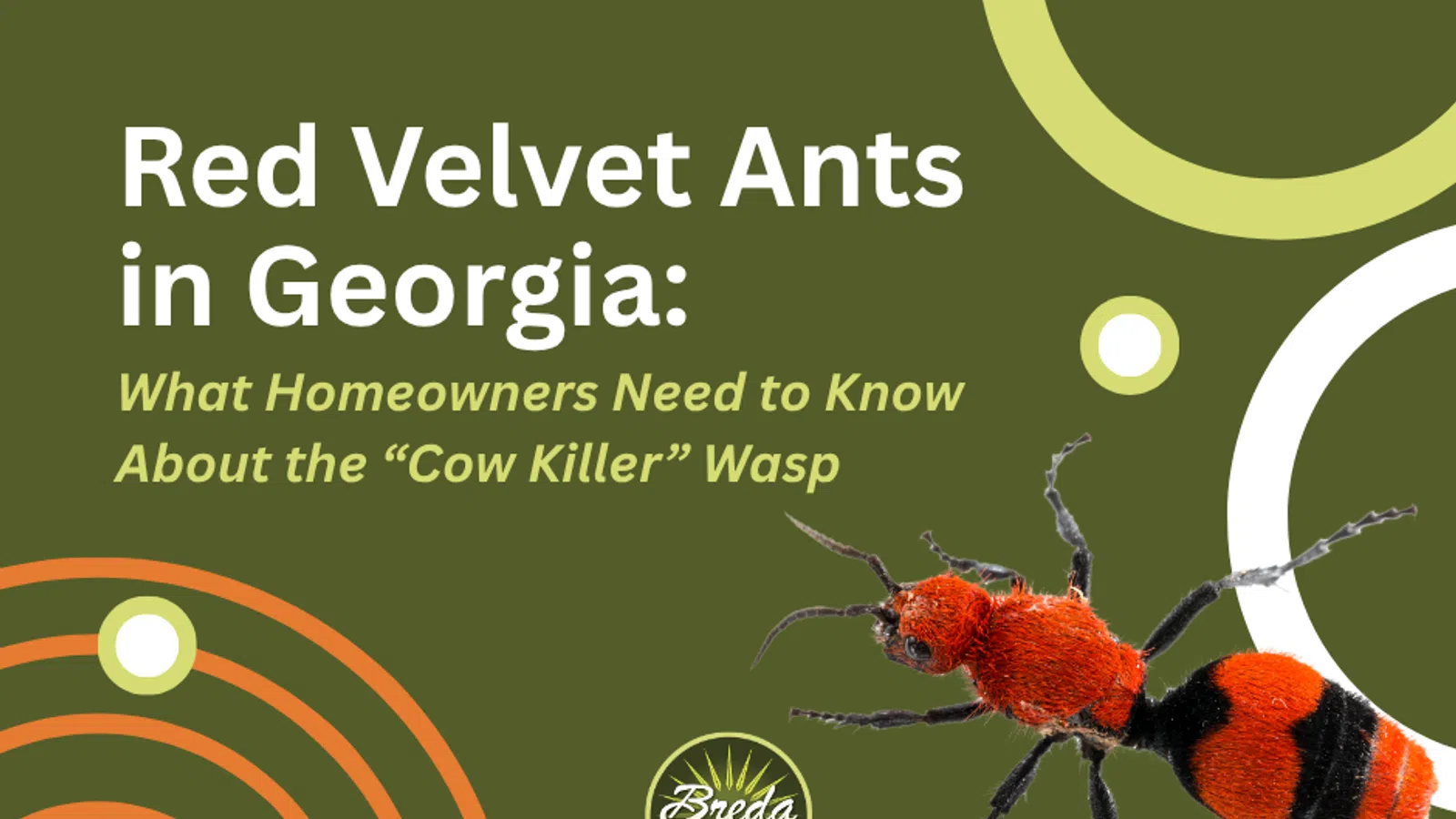
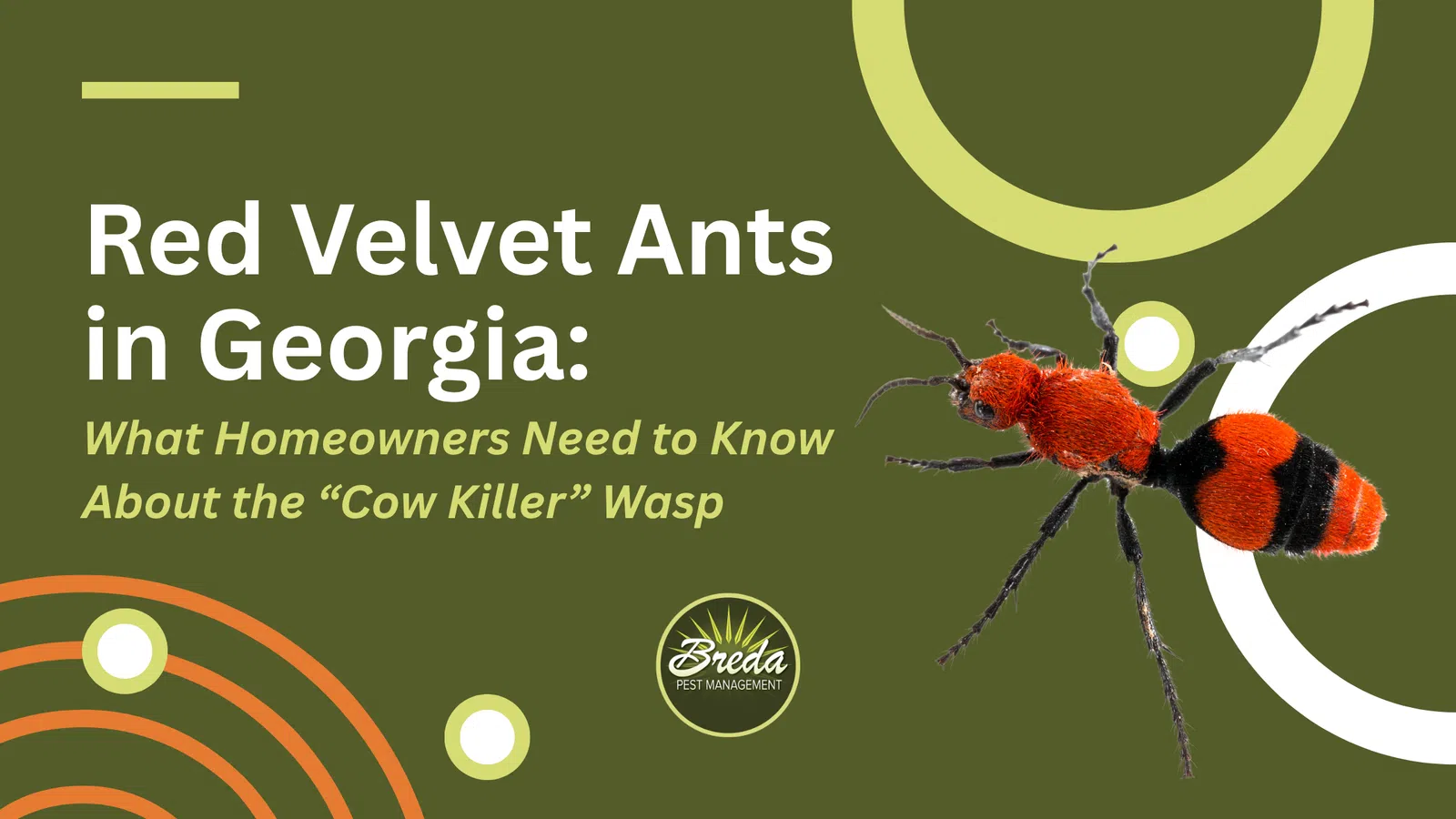
You're walking across the yard on a hot Georgia afternoon when something bright red and fuzzy goes booking it across the ground. It looks like an ant. A very large, very red ant.
Before curiosity gets the best of you, here's the most important thing we can tell you: Do. Not. Pick. It. Up.
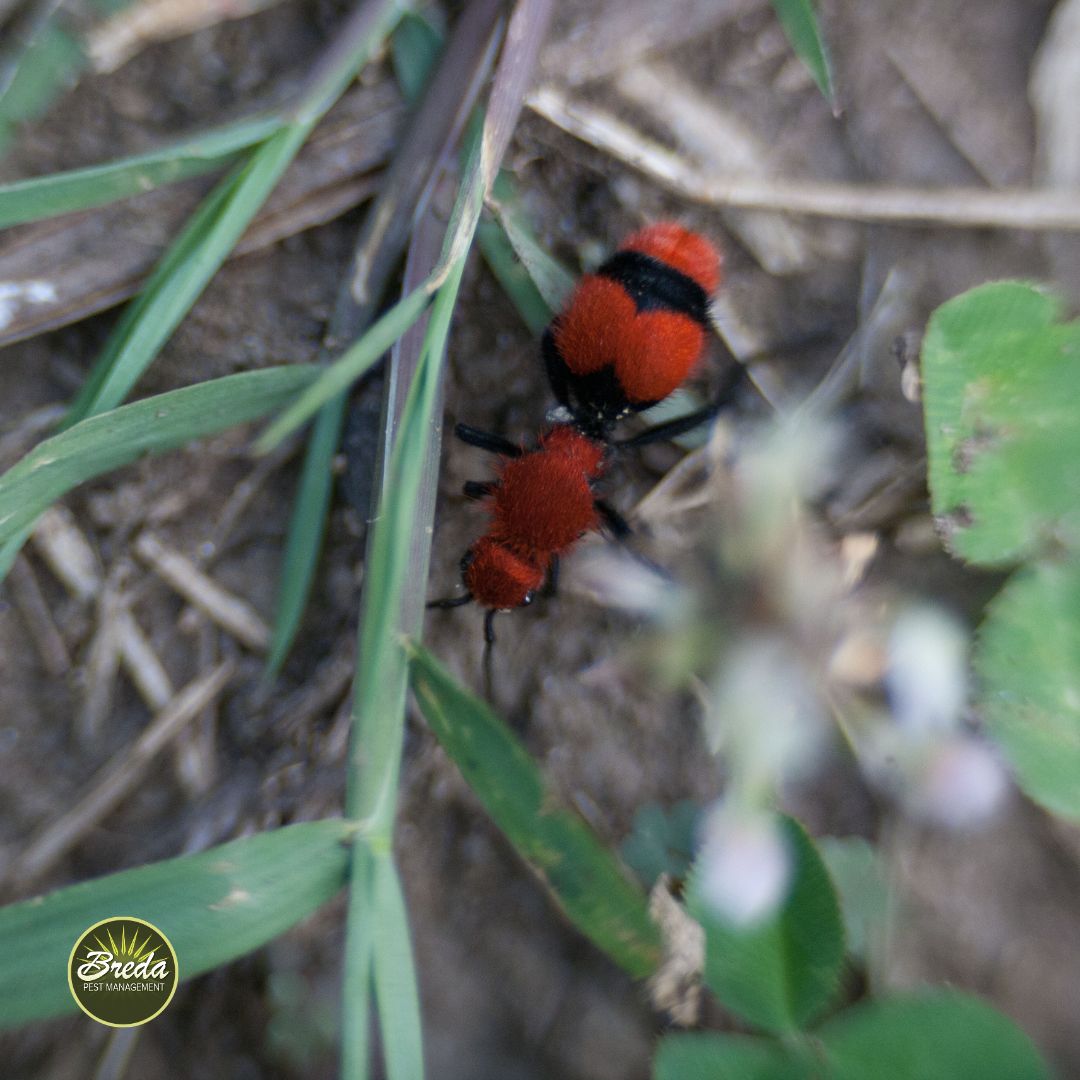
That strange little visitor may be a red velvet ant, commonly known by the nickname "cow killer." And while that name is much more dramatic than the actual threat, this is one Georgia insect you definitely want to admire from a distance.
Let's talk about what Red Velvet Ants actually are, why you're suddenly seeing them in your yard, and what Metro Atlanta homeowners should do when one shows up.
First Things First: Red Velvet Ants Aren't Ants
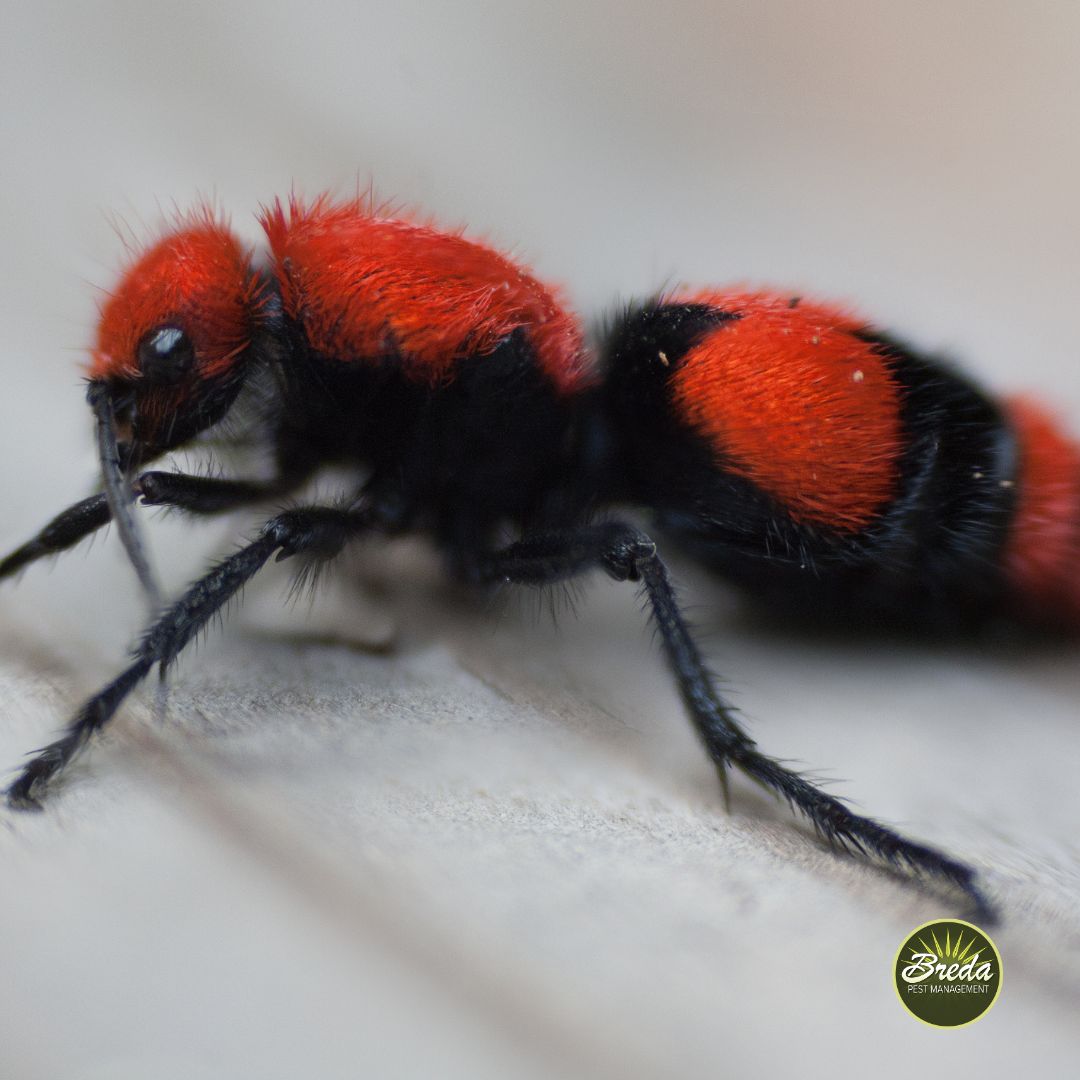
Plot twist! Despite the name, Red Velvet Ants aren't actually ants at all. They're wasps. More specifically, the fuzzy, ant looking insect you're most likely to notice running across the ground is a wingless female wasp. Male velvet ants have wings and look more traditionally wasp-like.
The University of Georgia Cooperative Extension describes velvet ants as fast-moving, solitary parasitic wasps. Females are wingless, while males have dark wings. UGA also offers one piece of advice we wholeheartedly support: never handle or pick up a velvet ant.
Their name makes a little more sense once you see one. Many species have striking red or reddish-orange coloring combined with dense hairs that create a soft, velvety appearance. Since the wingless females spend their time crawling around on the ground, they look enough like giant fuzzy ants to confuse just about anyone.
So if you've been Googling red velvet ant Georgia after spotting one in your yard, congratulations. You've found a wasp disguised as an ant. Nature likes to keep us humble.
When Do Red Velvet Ants Show Up in Georgia?
Red Velvet Ants are warm-weather insects, and late summer is prime time to notice them around North Georgia.
You may begin seeing them in July, with August and September providing a particularly good window for sightings. University of Kentucky Entomology similarly notes that velvet ants are commonly seen wandering open areas of yards during July, August, and September.
Hot, sunny days are when homeowners are especially likely to notice females moving quickly across open ground.
If you're trying to identify a red velvet ant Atlanta GA homeowners may see during late summer, look for:
- Bright red, reddish-orange, black, yellow, or contrasting coloration
- A dense, fuzzy or velvety-looking body
- A female crawling quickly across the ground rather than flying
- Activity in sunny, open areas
- Sightings around sandy, loose, or sparsely vegetated soil
- One individual rather than a trail or colony of insects
That's another big clue: velvet ants are solitary. You're not going to see an organized velvet-ant highway marching toward your kitchen like you would with some true ants.
Why Are They Called "Cow Killers"?
Because "mildly concerning fuzzy wasp" apparently wasn't dramatic enough. We're kidding. The nickname comes from the reputation of the female's extremely painful sting. Folklore claimed that a sting was powerful enough to kill a cow, which gave rise to the names "cow killer" and "cow killer ant." So no, a velvet ant is not normally capable of killing a healthy cow. And yes, their sting can really hurt.
The National Pest Management Association's velvet ant guide explains that females have a potent sting, while males cannot sting. Clemson University's velvet ant guidance similarly notes that the sting can be extremely painful but is rarely dangerous.
Red velvet ants are not insects that chase people around looking for a fight. In fact, velvet ants generally try to escape when encountered. The problem comes when a female is grabbed, stepped on, trapped against the skin, or otherwise handled.
And that brings us back to Rule No. 1: Don't pick up the fuzzy red bug. Seriously.
Why Are Red Velvet Ants in My Yard?
Seeing red velvet ants in the yard of Georgia properties doesn't mean your home is dirty, your lawn has been neglected, or you're facing some massive infestation. They aren't particularly interested in your house or your leftovers. Unlike roaches, rodents, or many household ants, velvet ants aren't showing up because they found a buffet in the pantry. They're generally looking for suitable habitat and other insects.
Female velvet ants are parasitoids. They seek out the nests of ground-nesting bees and wasps, enter those nesting areas, and lay eggs associated with the developing host. Their young then develop at the host's expense.
Your property may be more attractive to velvet ants if it has:
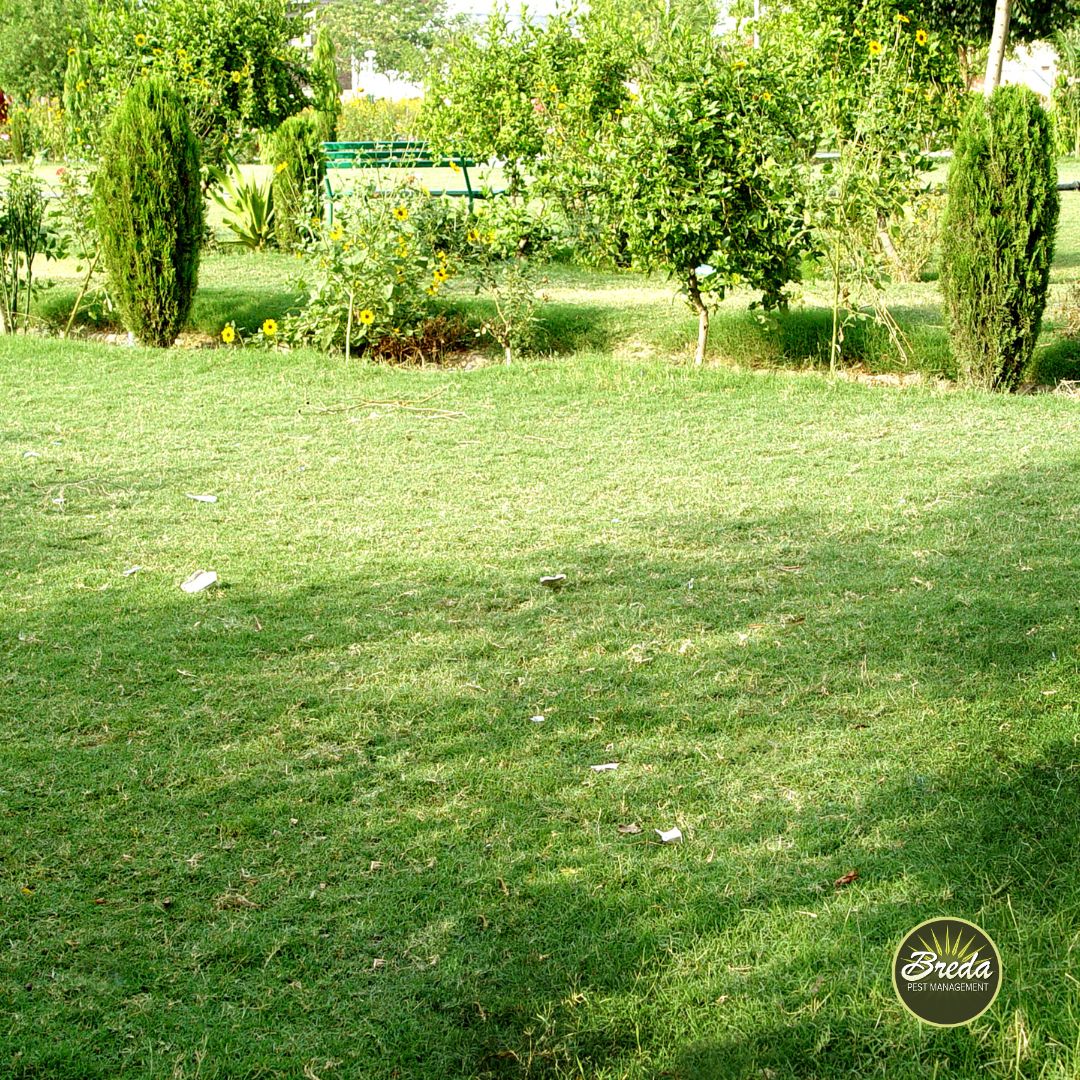
- Open, sunny areas of lawn
- Dry or sandy soil
- Loose soil and bare patches
- Lawn edges with sparse vegetation
- Ground-nesting bee or wasp activity
- Plenty of hot, exposed ground during summer
Males can fly and may occasionally appear around flowers or lights, but the females are the red, wingless ground wanderers homeowners tend to notice.
Do I Have a Red Velvet Ant Infestation?
Probably not, and this is where proper pest identification really matters.
Velvet ants don't form the large social colonies we associate with fire ants, odorous house ants, or yellowjackets. UGA notes that they're generally uncommon enough that extensive chemical control isn't necessary. That's why a velvet ant Georgia sighting should be handled differently from finding a fire ant mound or discovering dozens of ants inside your kitchen.
At BREDA, we don't believe in treating every pest problem exactly the same way. Our comprehensive pest control service is based on identifying the pest and targeting the areas where insects actually live, travel, and enter the home instead of simply spraying everywhere and hoping for the best.
Sometimes the right pest-control recommendation is treatment. Sometimes it's prevention. And sometimes it's simply: leave that weird fuzzy wasp alone.
How to Get Rid of Red Velvet Ants in Georgia
If you see a single female crossing the yard, the simplest solution is usually to give her space and let her keep moving.
For homeowners wondering how to get rid of the red velvet ants Georgia properties may attract, start by looking at what is bringing them into that area rather than automatically reaching for widespread pesticide treatments.
You can:
- Avoid handling or stepping on velvet ants
- Wear shoes when walking through areas where you've spotted them
- Keep an eye on children and pets in areas with repeated activity
- Watch for ground-nesting bee or wasp activity nearby
- Address recurring bare or loose-soil areas when appropriate
- Have persistent stinging-insect activity professionally identified
If you're repeatedly seeing velvet ants or other stinging insects in an area your family uses frequently, professional red velvet ant control Atlanta GA homeowners request should begin with proper identification of what's actually happening on the property.
The same is true for stinging insect control Atlanta GA homeowners need around patios, play areas, walkways, or other high-traffic spaces. A velvet ant wandering through the lawn is very different from a defensive yellowjacket colony underground.
Identification first; treatment second.
What Should I Do if a Red Velvet Ant Stings Me?
A red velvet ant sting Georgia homeowners experience can be intensely painful, but most stings cause a localized reaction rather than a serious medical emergency. If you're stung, move away from the insect and monitor your symptoms. Seek prompt medical attention for signs of a severe allergic reaction, such as trouble breathing, swelling of the face or throat, dizziness, or other systemic symptoms.
And maybe retire "I wonder if it's actually fuzzy" from the list of experiments we're conducting in the backyard.
Frequently Asked Questions about Red Velvet Ants
Are Red Velvet Ants actually ants?
No. Despite their name and ant-like appearance, Red Velvet Ants are wasps. Females are wingless, which is why they look so much like large fuzzy ants. Males have wings.
Why are Red Velvet Ants called cow killers?
The nickname comes from folklore surrounding the female's extremely painful sting. The sting can be intense, but the idea that it routinely kills cows is an exaggeration.
Can male Red Velvet Ants sting?
No. Only females have the stinging apparatus. Males have wings and cannot sting.
When are Red Velvet Ants most active in Georgia?
Georgia homeowners are most likely to notice them during warm weather, particularly in the summer and early fall. July through September is a good window for sightings around North Georgia, especially in open areas.
Why do I have Red Velvet Ants in my yard?
Your yard may provide the sunny, loose or sandy ground they travel through, particularly if ground-nesting bees or wasps are present nearby. Female velvet ants seek those nests as part of their reproductive life cycle.
Should I spray my entire yard for Red Velvet Ants?
Usually, no. Because velvet ants are solitary and don't establish large colonies like true ants, UGA Cooperative Extension says widespread chemical control is generally unnecessary. Proper identification should come before any treatment plan.
What should I do if I see one?
Give it space. Don't touch it, pick it up, or let kids or pets investigate it. A single velvet ant wandering across your property generally isn't cause for panic.
When should I call BREDA?
If you're repeatedly finding stinging insects around areas where your family spends time, aren't sure what you're looking at, or suspect another pest problem is attracting activity to your property, give us a call. We can identify what's happening and determine whether treatment is actually necessary.
If you find yourself needing pest control and want it handled thoroughly, don't hesitate to give us a call. The BREDA Guarantee promises to fix your pest problem and keep it fixed—no matter the circumstances. Schedule a consultation online or give us a call at 770-466-6700.