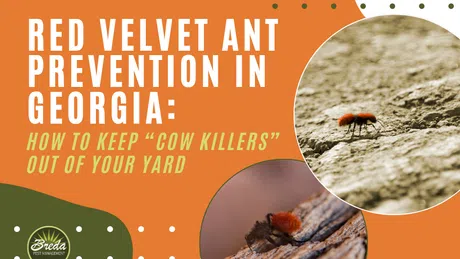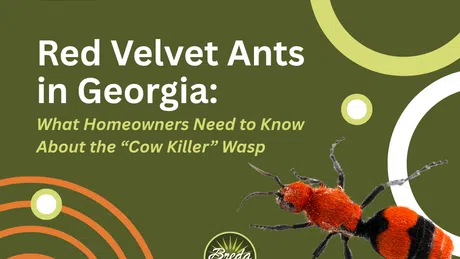
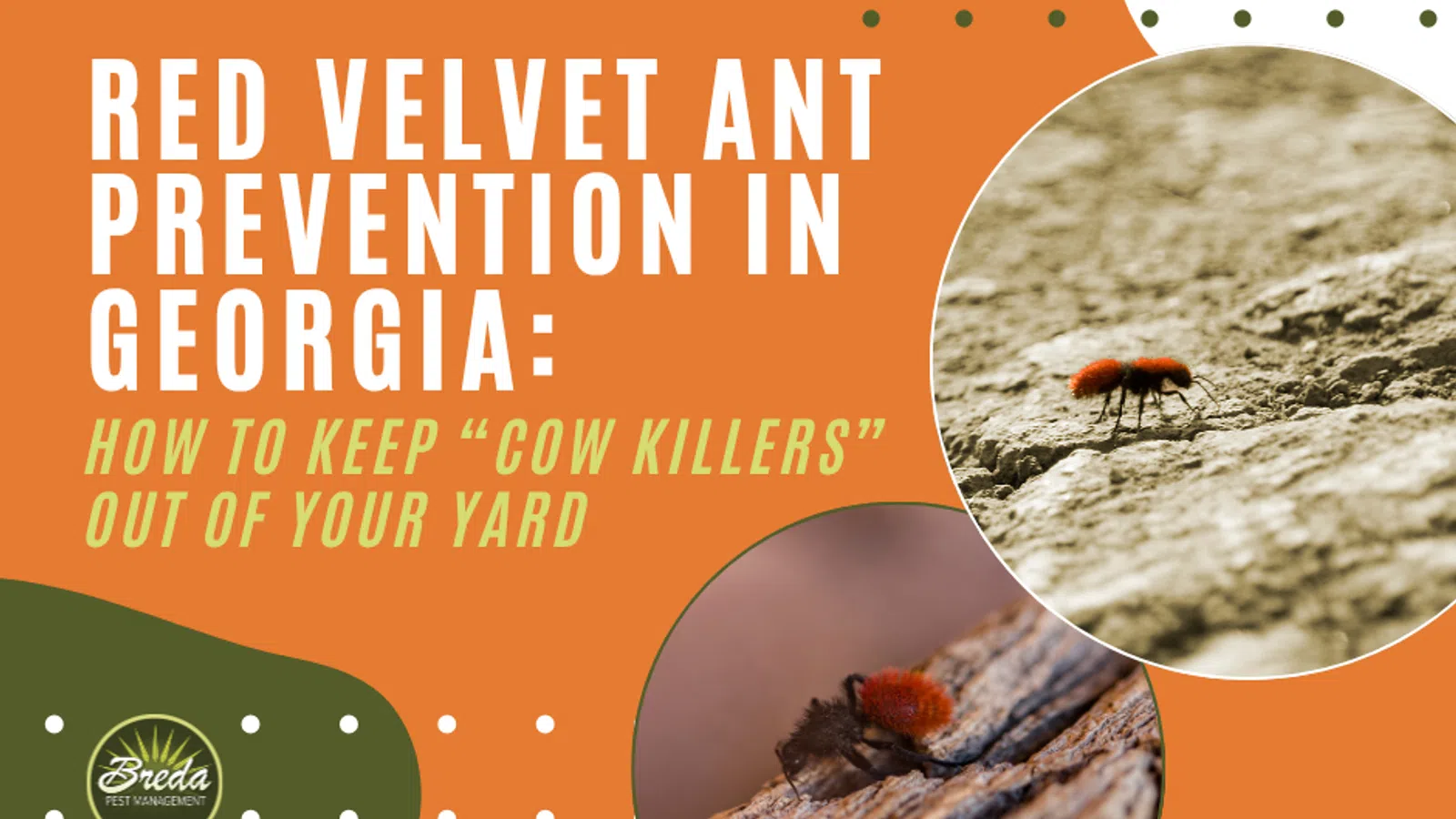
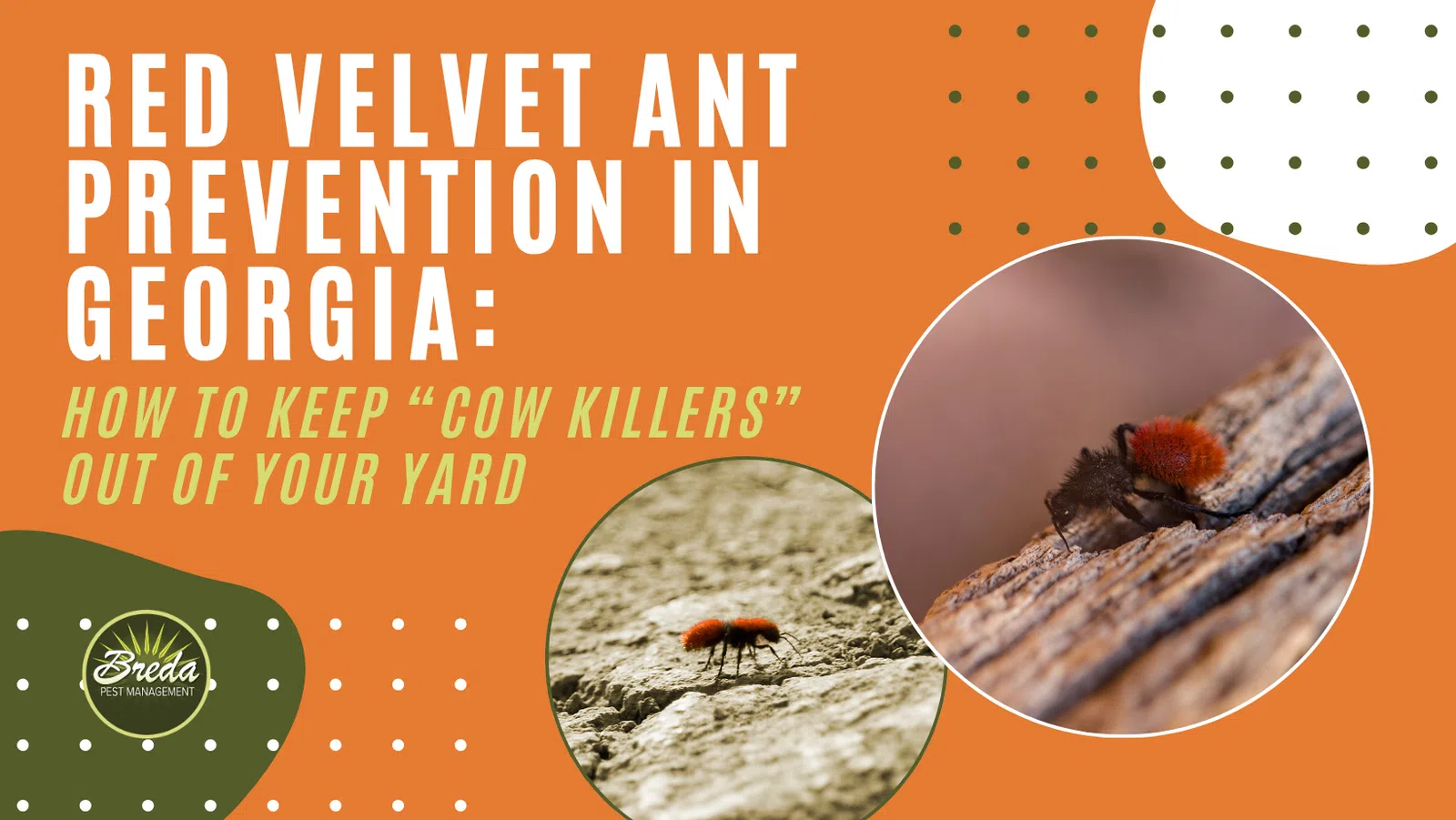
So, you've spotted a Red Velvet Ant cruising across the yard. Your next thought should be, How do I make sure she doesn't invite friends?
Here's the good news: Red Velvet Ants don't behave like the ants invading your kitchen or fire ants building a mound in the backyard. They're solitary wasps, which means there isn't a giant underground Red Velvet Ant colony waiting to overthrow your lawn.
That also means red velvet ant prevention Georgia homeowners can use looks a little different from traditional ant control. With these insects, the goal is less about finding a nest and more about making the areas around your home less attractive to them and the ground-nesting insects they use as hosts. Let's get into it!
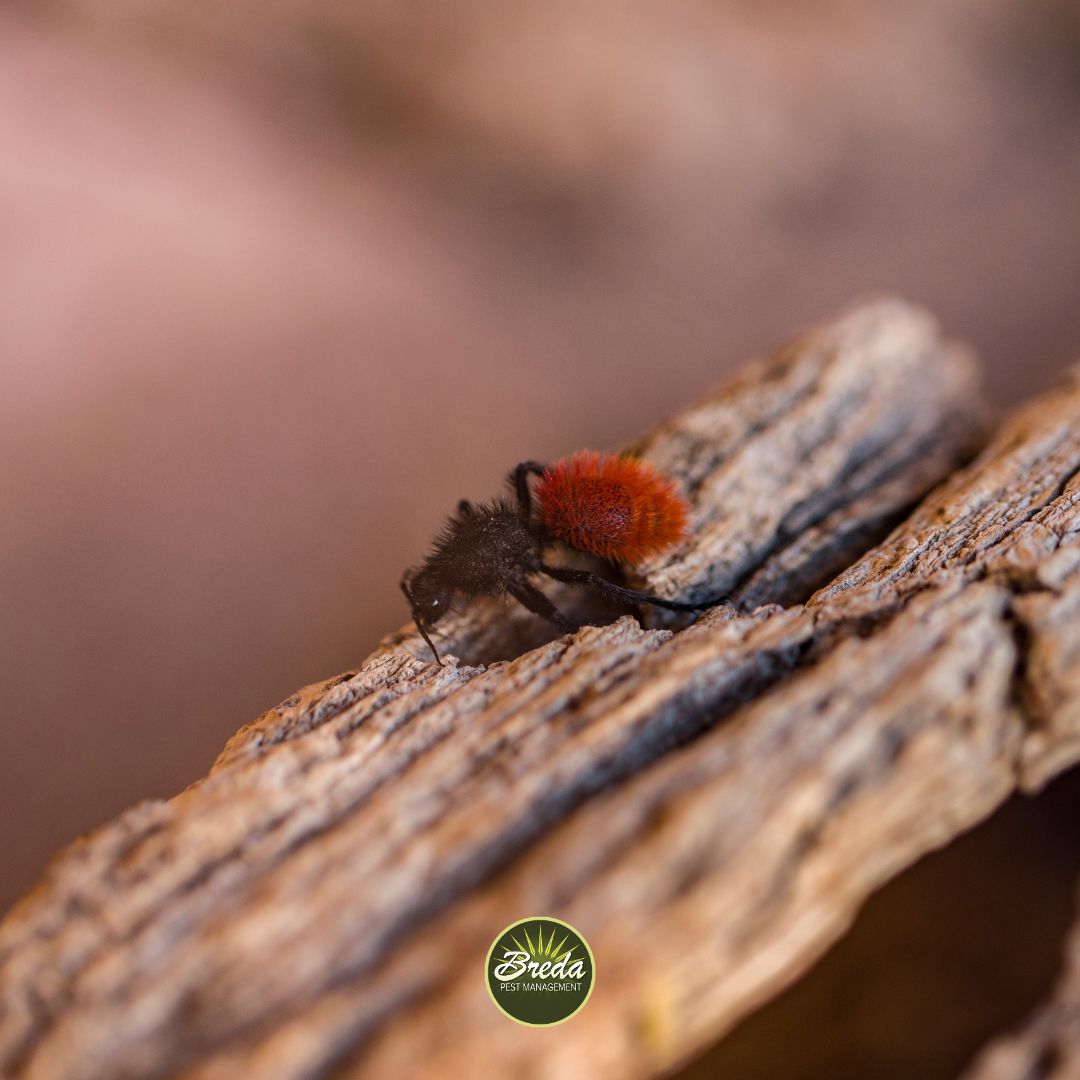
Why Do Red Velvet Ants Keep Showing Up in My Yard?
Before we talk about prevention, it helps to understand what they're doing there in the first place.
Female velvet ants wander across the ground searching for the nests of solitary bees and wasps. They enter those nests and lay eggs associated with the host's developing young. The University of Georgia Cooperative Extension's guide to southeastern household pests identifies velvet ants as solitary parasitic wasps and notes that they commonly parasitize the larvae of other solitary wasps.
Translation: they're probably not interested in your house. They're interested in what's happening underneath your yard.
If you're seeing red velvet ants in yards of Georgia properties during summer, certain conditions may make the area particularly useful to them:
- Bare or sparsely covered soil
- Dry, sandy or loose ground
- Sunny, open areas
- Ground-nesting bee or wasp activity
- Lawn edges and areas where turf has thinned
- Places where outdoor debris creates extra insect habitat
And that's where prevention starts.
DIY Tip #1: Keep Your Grass and Ground Cover Healthy
If you've been wondering how to prevent red velvet ants Georgia homeowners can start with something surprisingly ordinary: take care of the lawn.
Many ground-nesting bees prefer exposed soil, thin turf and well-drained areas. UGA notes that ground-nesting bees commonly build nests in bare soil, field edges, sandy patches and lightly disturbed ground. Another UGA resource recommends establishing dense turfgrass as one of the best long-term ways to discourage ground-nesting activity in lawn areas where you don't want it.
Because those insects can serve as hosts for velvet ants, maintaining healthy ground coverage may indirectly make portions of your yard less appealing to wandering female velvet ants.
Pay particular attention to:
- Thin or struggling patches of grass
- Bare soil along walkways and driveways
- Dry areas that receive lots of sun
- Heavily trafficked portions of the lawn
- Sandy or loose areas where insects are entering the ground
This doesn't mean you need to transform every inch of your property into a perfectly manicured golf course. It means that in the areas where your kids play, your dog runs, or you're constantly walking barefoot, filling in bare patches can be a practical part of DIY red velvet ant control Georgia homeowners can manage themselves.
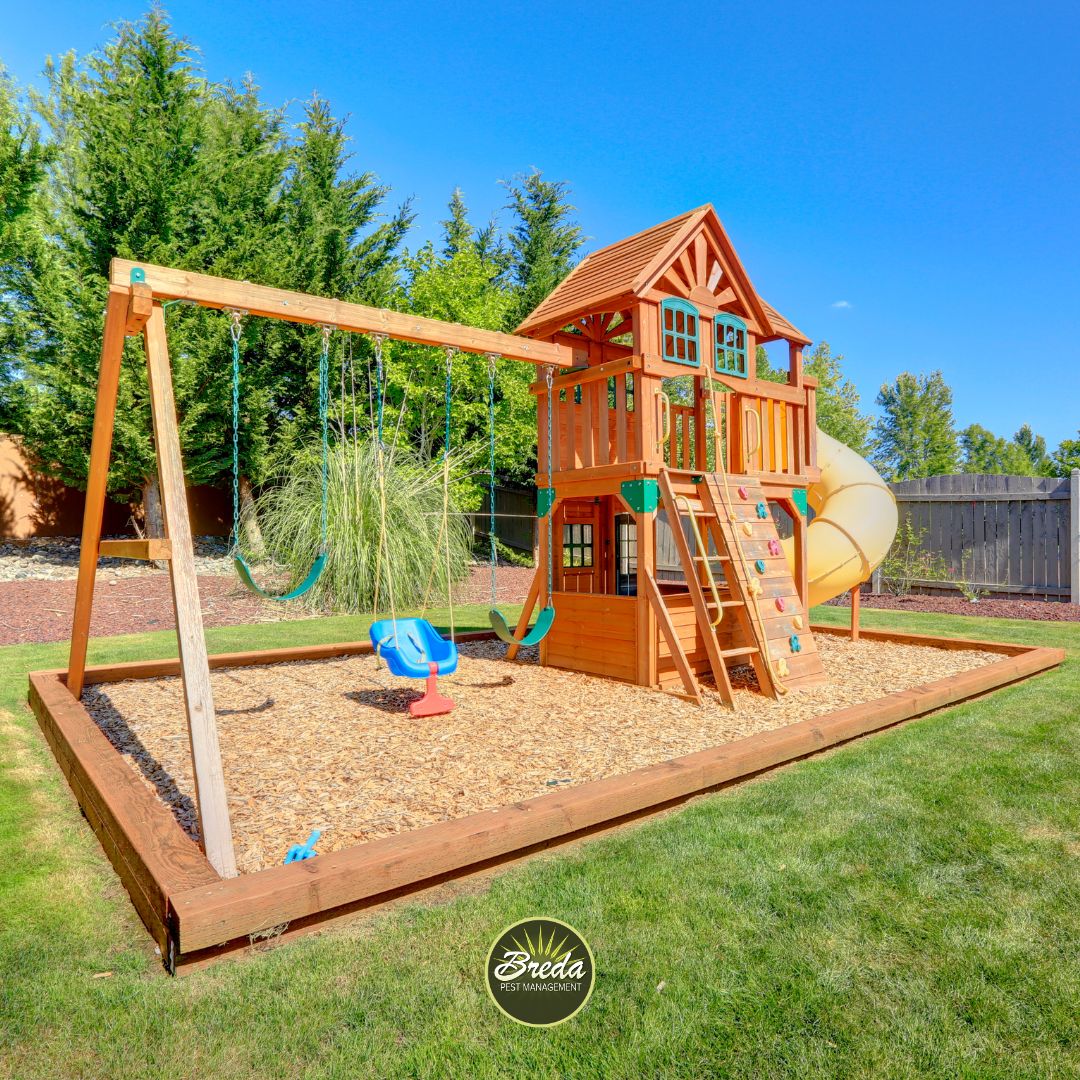
DIY Tip #2: Clean Up Debris Around High Traffic Areas
Regularly clear unnecessary piles of leaves, boards, stones, branches and other debris from the areas where your family spends time.
Outdoor debris can provide sheltered habitat for all kinds of insects, including potential hosts and other pests. Habitat modification and sanitation are also core parts of Integrated Pest Management, or IPM, an approach that emphasizes understanding the pest and changing the conditions supporting its activity before moving on to additional controls.
Focus especially on debris around:
- Patios
- Children's play areas
- Walkways
- Decks
- Outdoor pet areas
- Lawn edges
- Frequently used sections of the backyard
A cleaner yard won't come with an official "NO COW KILLERS ALLOWED" sign, but reducing unnecessary habitat is one more way to make those high-use areas less inviting.
No, They're Probably Not Trying to Get Into Your House
Red Velvet Ants are primarily outdoor insects. They don't establish the kind of colonies inside your walls, kitchen or crawl space that homeowners associate with common household ants.
Female velvet ants spend their time wandering on the ground in search of suitable host nests. So if your search for how to get rid of red velvet ants has led you to advice about sealing cereal containers, wiping crumbs off counters or putting ant bait underneath the kitchen sink...wrong ant.
For cow killer ant prevention Georgia homeowners should concentrate primarily on outdoor habitat and recurring activity around the property.
What if DIY Red Velvet Ant Prevention Isn't Working?
Here's where we're going to say something you might not expect from a pest management company: don't automatically spray everything.
Velvet ants don't have a conventional social colony with hundreds or thousands of workers returning to one centralized nest. UGA specifically notes that they are usually uncommon enough that widespread treatment isn't necessary.
If you're repeatedly seeing velvet ants around a high-traffic part of the property, a better next step is figuring out why they're there. That's where a professional inspection can help.
At BREDA, our pest control approach is built around identifying the specific pest affecting a property and targeting the places pests actually live, travel and enter. We don't believe in a one-size-fits-all "spray and hope for the best" approach. Every home—and every pest problem—is different.
For red velvet ant control Atlanta GA homeowners may need, an inspection can help answer questions like:
- Are these actually Red Velvet Ants?
- Are ground-nesting bees or wasps active nearby?
- What conditions may be contributing to repeated sightings?
- Is another stinging insect actually causing the bigger problem?
- Can habitat changes help reduce activity?
- Is targeted professional treatment appropriate at all?
Sometimes pest control means treatment. Sometimes it means changing the conditions that brought the pest there in the first place. Knowing the difference matters.
Ask About an Integrated Pest Management Approach
The EPA describes Integrated Pest Management as an approach that combines knowledge about a pest's life cycle and environment with appropriate prevention and control options. Identification, monitoring and prevention come before deciding whether additional control is necessary. That's especially relevant for velvet ant control Georgia homeowners may be considering.
Because these insects are solitary and don't maintain a conventional colony, routine material control across the entire property generally isn't the answer. Instead, the process should begin with:
- Correctly identifying the insect.
- Inspecting the property for contributing conditions.
- Identifying possible host activity.
- Modifying habitat where practical.
- Monitoring continued activity.
- Using targeted professional control only when the situation calls for it.
That's a much smarter approach than treating an entire yard because one fuzzy red wasp ran across the driveway.
So, Can You Actually Keep Red Velvet Ants Away?
You can't make your yard invisible to every wandering insect in Georgia. But you can make the spaces where your family lives and plays less favorable for repeated activity.
If you're trying to handle pest control for red velvet ants, remember the basics:
- Maintain healthy, dense turf in high-use lawn areas.
- Address bare and sandy patches where appropriate.
- Keep unnecessary yard debris under control.
- Watch for ground-nesting insect activity.
- Don't handle female velvet ants.
- Have repeated activity properly identified before treating anything.
And if your DIY efforts aren't solving the problem or you aren't completely sure what you're looking at, schedule an inspection with our team. We'll figure out what's actually happening on your property before deciding what needs to happen next.
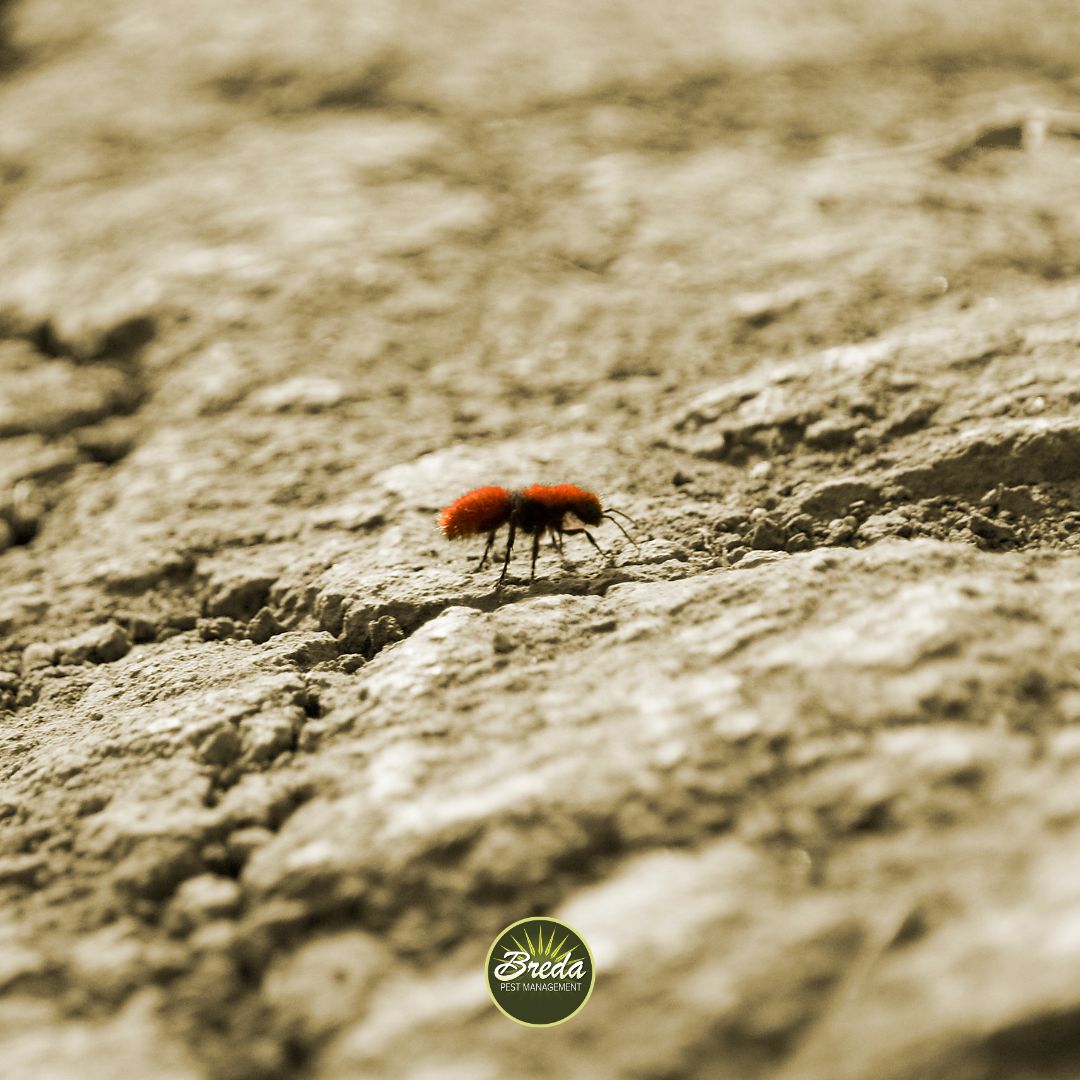
Frequently Asked Questions for Red Velvet Ant Prevention
How do I prevent Red Velvet Ants in my Georgia yard?
Start by maintaining healthy turf and reducing bare, loose or sandy patches in the high-use areas of your property. Clearing unnecessary outdoor debris and identifying ground-nesting bee or wasp activity may also help make those areas less favorable to wandering velvet ants.
Why does healthy grass help with Red Velvet Ant prevention?
Velvet ants use certain solitary ground-nesting bees and wasps as hosts. Many of those insects favor bare or sparsely vegetated soil. UGA recommends dense turfgrass as a long-term way to discourage ground nesting in lawn areas where that activity isn't wanted.
Do Red Velvet Ants build nests in my yard?
Not conventional colonies like fire ants do. Velvet ants are solitary wasps. Females wander across the ground searching for the nests of other solitary bees and wasps that can serve as hosts.
Are Red Velvet Ants trying to get inside my house?
Generally, no. Red Velvet Ants are outdoor insects and don't establish indoor colonies. A female crawling across your lawn is usually searching for host insects, not an entrance into your kitchen.
Should I treat my whole yard for Red Velvet Ants?
Usually not. UGA states that wide-scale treatments are unnecessary for velvet ants because they typically aren't present in large enough numbers to justify them. Identification and habitat management should come first.
What should I do if I see a Red Velvet Ant?
Leave it alone and give it room to move away. Females are capable of delivering an extremely painful sting if handled, so don't pick one up. Even if the fuzzy exterior is begging you to find out whether it actually feels like velvet.
It can remain a mystery.
When should I call BREDA about Red Velvet Ants?
If you're seeing them repeatedly around patios, play spaces, walkways or other high-traffic areas or you're not sure whether the insect you're seeing is actually a Red Velvet Ant, give us a call. We can inspect the property, identify the pest and determine whether habitat changes, targeted treatment or another solution makes the most sense.
If you're tired of wondering what the pests in or around your home are doing and just want them gone, don't hesitate to give us a call. The BREDA Guarantee promises to protect your home and keep it protected—no matter the circumstances. Schedule an inspection online or give us a call at 770-466-6700.