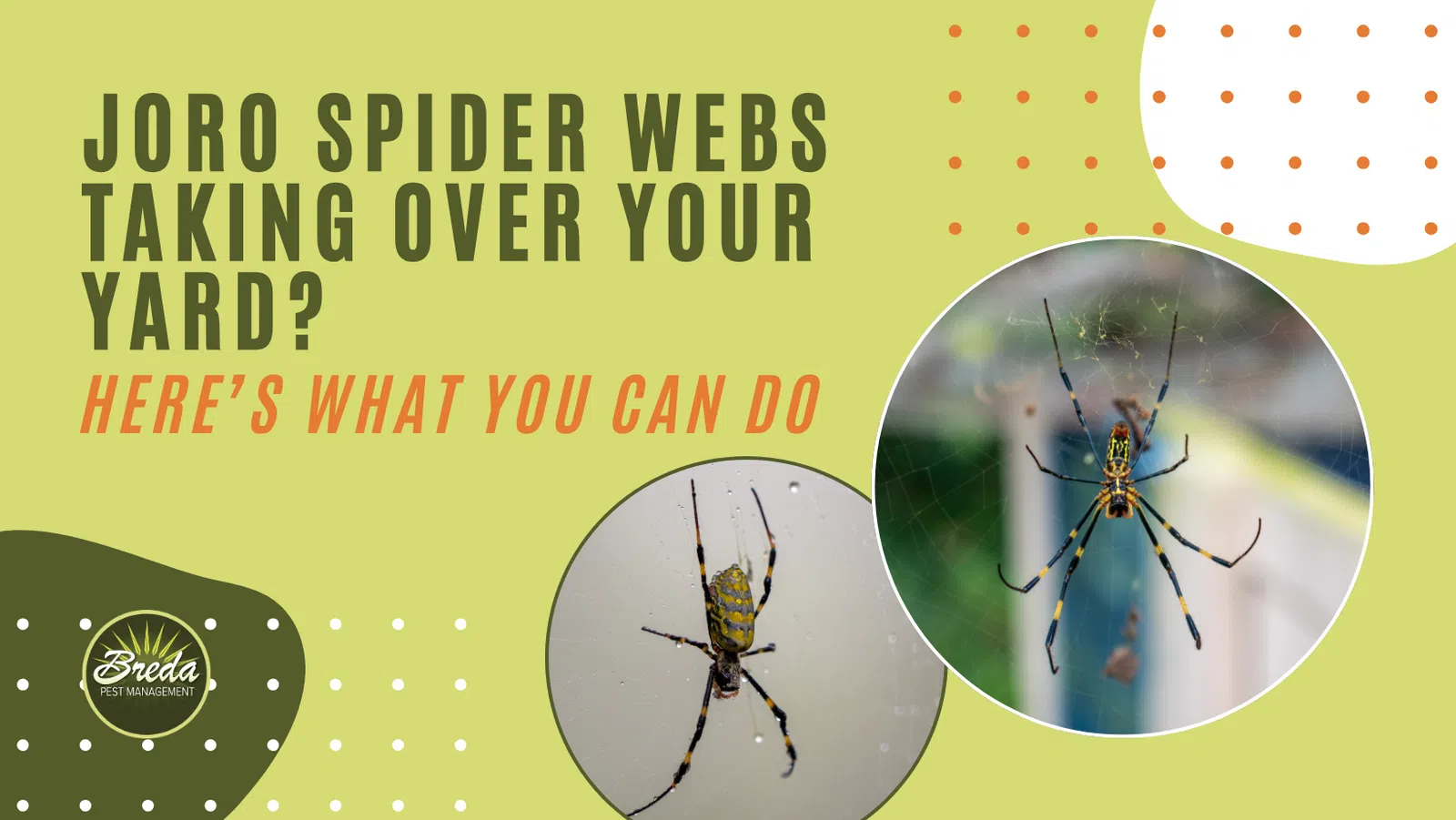
There are spider webs. And then there are Joro spider webs—the giant sticky ones that manage to appear directly between you and wherever you were trying to walk.
If you live in Georgia, you probably know exactly what we're talking about. Joro spiders have become a familiar sight across Metro Atlanta, especially as summer turns into fall and the females reach their very noticeable adult size. The good news? Despite their appearance, these oversized spiders are much more intimidating than dangerous.
The less-good news? Their webs can absolutely take over a porch, deck, backyard, mailbox, or just about any other outdoor space they decide has good real estate.
So, if you're wondering how to get rid of Joro spiders in Georgia—or at least convince them to build somewhere other than directly over your patio furniture—we've got you covered.
First, Meet the Joro Spider
Joro spiders (Trichonephila clavata) are large orb-weaving spiders originally from East Asia. According to the University of Georgia Cooperative Extension, they were first detected in Georgia in 2014 and have since become established across much of the state.
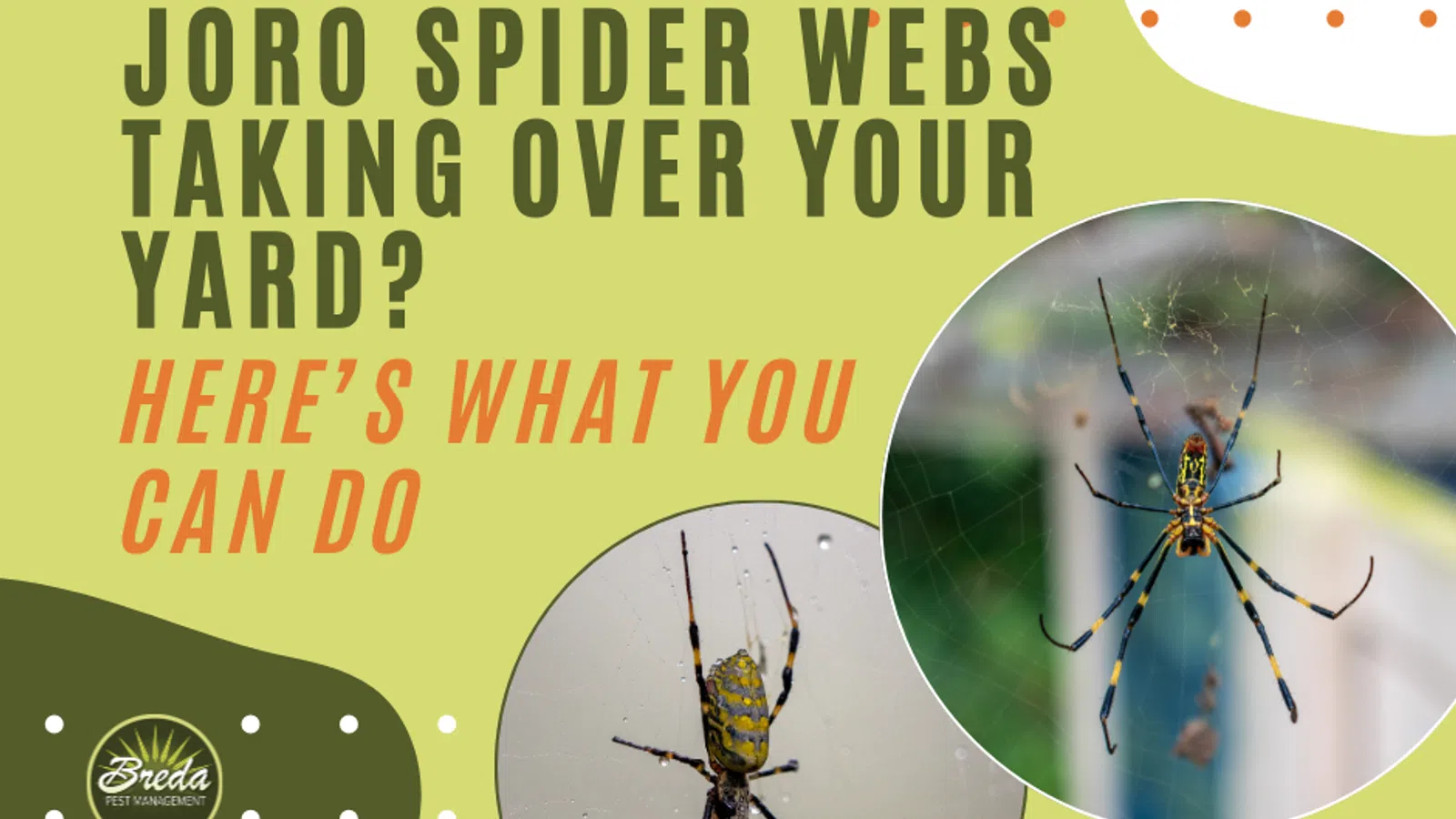
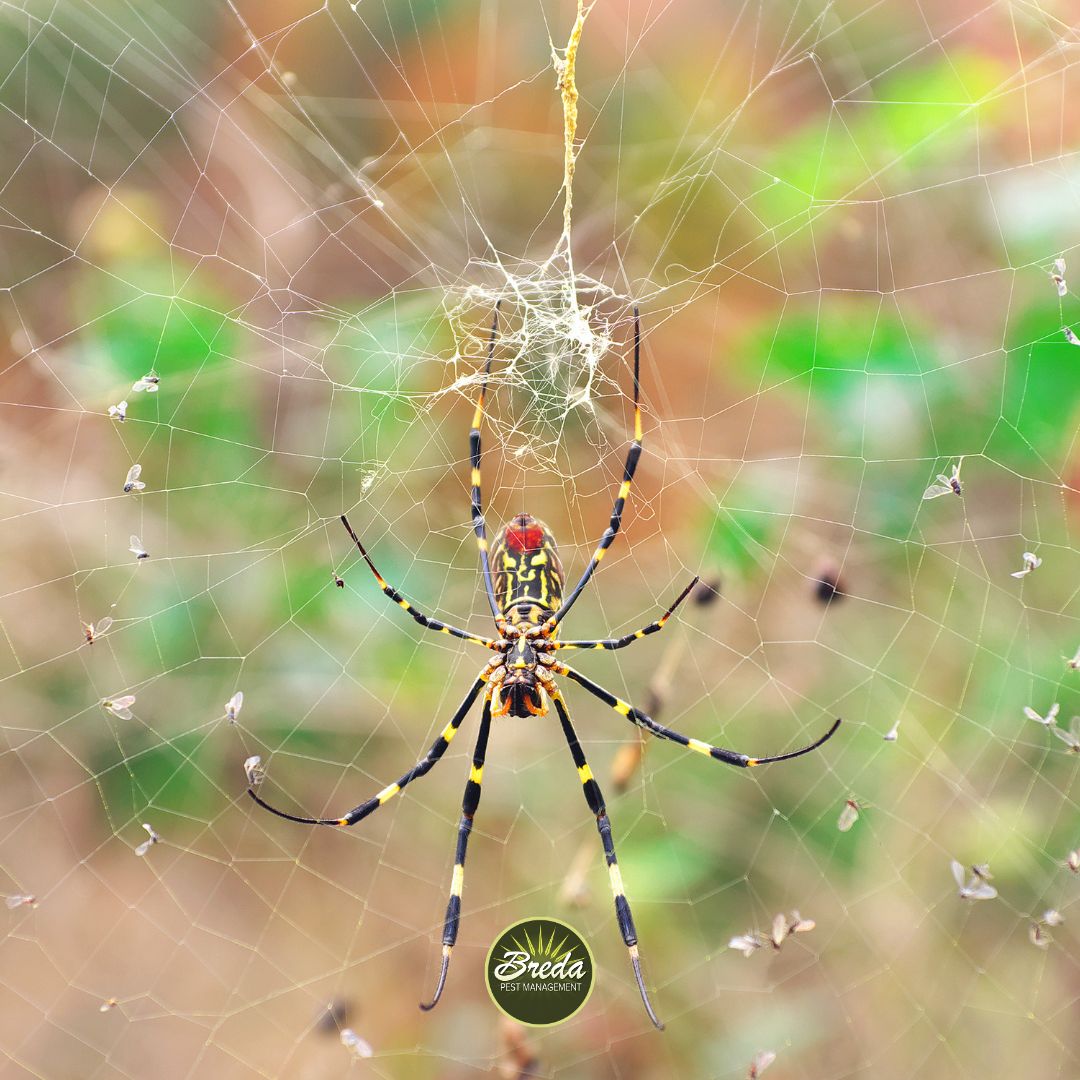
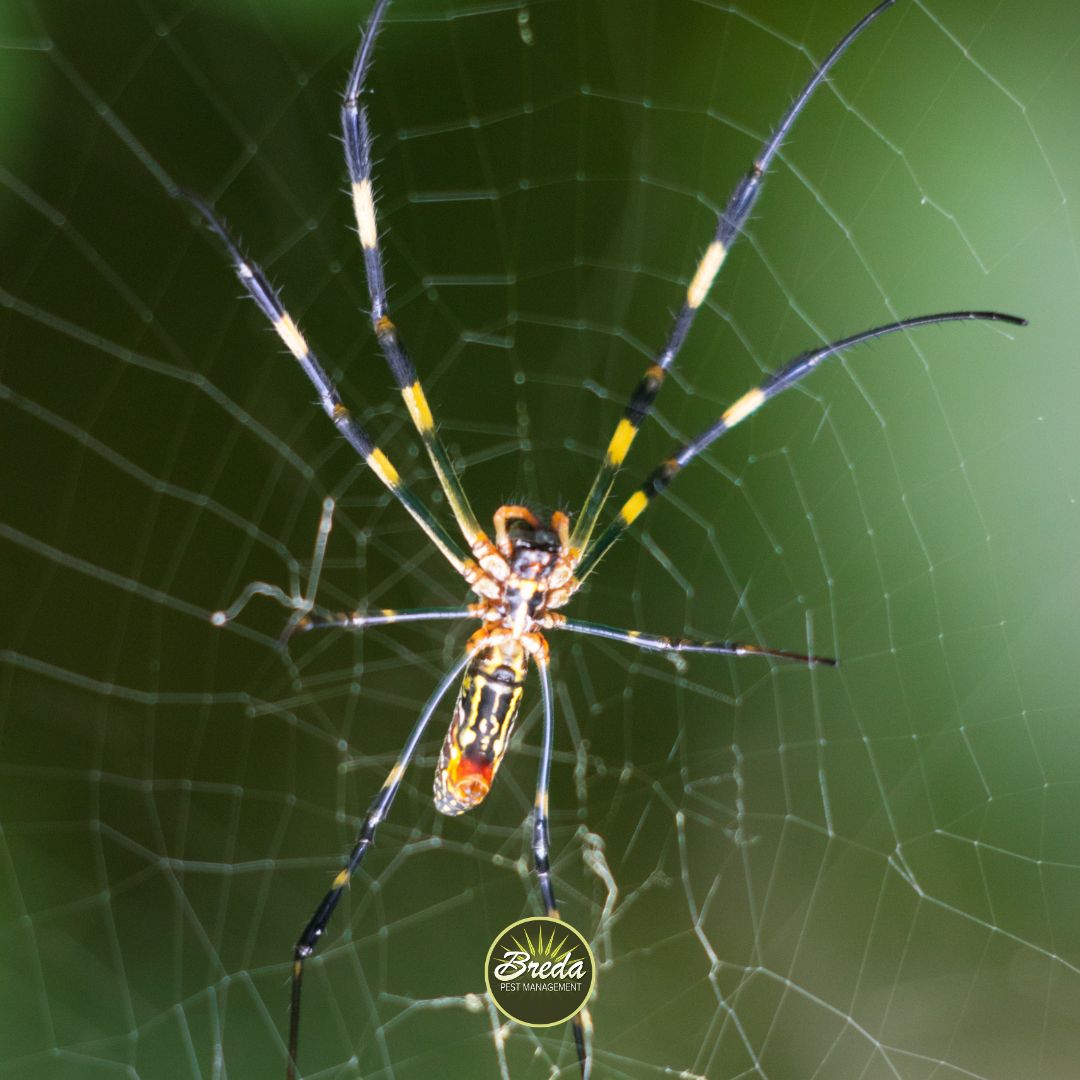
Adult females are the ones that usually get your attention. With their bright yellow, blue-green, black, and red coloring, they're pretty hard to miss. Their bodies can exceed an inch in length, and their overall leg span can reach roughly three to four inches.
Yes, you read that right. Four inches. That makes the Joro spiders Georgia homeowners encounter some of the largest spiders they're likely to find hanging around the yard. But large doesn't equal aggressive. UGA researchers have found that Joro spiders are actually remarkably shy, typically freezing or retreating when disturbed rather than attacking.
So, while we completely understand not wanting one hanging six inches from your front door, there's no reason to panic.
Why Does It Suddenly Feel Like Joro Spiders Are Everywhere?
Joro spiders spend the winter as eggs. Those eggs hatch in the spring, and the tiny spiderlings begin spreading into new areas. Some disperse through a behavior called ballooning, where they release strands of silk that catch the wind and carry them to a new location. UGA researchers have identified ballooning as one way Joros have spread throughout Georgia.
They grow throughout the summer and become much easier to recognize by late summer and early fall. That's when homeowners dealing with Joro spiders in Atlanta, GA tend to notice those enormous golden webs popping up everywhere.
Common web-building spots include:
- Between trees and shrubs
- Around porches and decks
- Between fence posts
- Near mailboxes
- Around landscaping
- Between outdoor structures
- Near exterior lights
- Around playsets and recreational areas
- Near patios and outdoor furniture
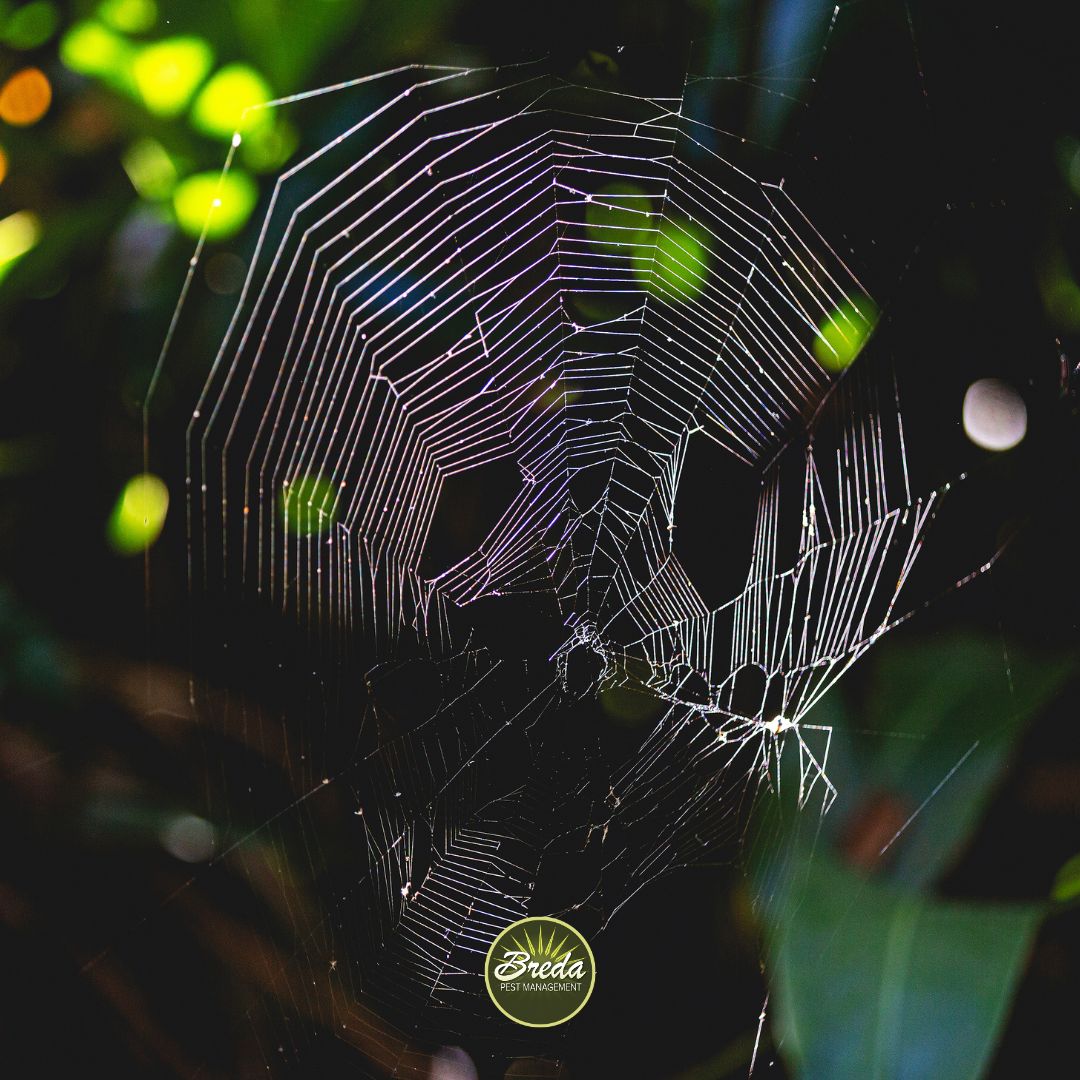
And these aren't tiny little cobwebs. UGA reports that mature Joro webs can span 10 feet or more, with support strands stretching 20 feet or farther. That is impressive engineering when it is between two trees. It's slightly less impressive when you walk through it carrying your morning coffee.
Can You Prevent Joro Spiders Around Your Home?
You likely can't completely eliminate Joro spiders from your property, and trying to eliminate every Joro in Georgia would be a losing battle anyway. But Joro spider prevention in Georgia is really about making the areas where you live, walk, sit, and play less attractive to them.
Here are a few things you can do yourself around your home:
1. Remove Webs Consistently
Regularly remove webs from porches, decks, fences, landscaping, mailboxes, and other high-traffic areas. The important approach here is consistency. According to UGA's guide to managing Joro spiders in the landscape, simply destroying a web once usually is not enough. Joros can rebuild surprisingly quickly.
If the same spider keeps rebuilding in an inconvenient location, repeated disruption may encourage it to move elsewhere.
2. Trim Trees and Shrubs Away From the House
Joros need anchor points for those giant webs. Trim shrubs and tree branches away from your home, deck, walkway, and porch when possible. Reducing vegetation around these areas removes some of the convenient structures spiders use to support their webs.
You don't need to turn your yard into a parking lot. You're simply creating a little more breathing room between the landscaping and the places your family actually uses.
3. Rethink Your Outdoor Lighting
Here's something homeowners sometimes overlook: spiders tend to build where dinner is easy to find.
Outdoor lighting attracts flying insects. Flying insects attract spiders. That means your porch light can accidentally create a pretty great buffet. For homeowners wondering how to keep Joro spiders away from your house, start by turning off unnecessary exterior lights when they are not needed. Light coming through brightly illuminated windows can contribute to nighttime insect activity around the home, too.
When outdoor lighting is necessary, consider warmer or yellow-toned bulbs. Colorado State University Extension recommends reducing exterior lighting or using lighting that is less attractive to insects as one way to reduce spider web-building around structures.
Bonus: fewer insects gathering around your lights can mean fewer opportunities for other spiders to set up shop, too.
4. Inspect Outdoor Furniture Before You Sit Down
This one sounds obvious—until you forget. Before using patio furniture, grills, playsets, outdoor decorations, umbrellas, or other items that have been sitting unused, give them a quick once-over.
Joros are excellent at taking advantage of spaces that have not been disturbed. A 10-second inspection beats discovering the web after you sit down.
5. Seal Gaps Around Doors and Windows
Joro spiders are primarily an outdoor nuisance, but general spider prevention around your home still matters. Check weatherstripping and seal unnecessary gaps around doors, windows, utility penetrations, and other exterior openings. Keeping insects out of the house also removes the food source that can attract spiders indoors.
Our approach to spider control at BREDA has always looked beyond the spider itself. If insects are thriving around or inside your home, spiders have a reason to stay. Take away the buffet, and you make your home a lot less appealing.
6. Clean Up Yard Debris and Clutter
Remove unnecessary piles of leaves, branches, unused containers, stacked materials, and excessive clutter around the exterior of your home. The goal isn't a sterile backyard. It's simply reducing protected areas where insects can gather and spiders can establish themselves undisturbed.
When DIY Joro Spider Control Isn't Cutting It
If you have one Joro web between two trees at the back of your property, you probably don't need professional Joro spider removal in Atlanta, GA. Leave it alone and let the spider handle some bugs for you. But when webs repeatedly appear around doors, porches, decks, play areas, walkways, or outdoor living spaces, that's a different story.
What feels like a Joro spider infestation in Georgia may actually be a combination of two things: great web-building locations + lots of insect activity. That's where professional Joro spider control in Atlanta, GA can make a difference.
At BREDA, we do not believe in simply spraying whatever happens to be visible and calling it a day. Our pest control services are customized to the home and the specific pest pressure we find.
For spider problems, that means looking at the bigger picture. Our technicians can:
- Identify environmental conditions contributing to spider activity
- Help homeowners understand what is attracting spiders
- Inspect potential pest entry points
- Address spider activity around the home
- Target insects that provide spiders with their food source
- Create a customized prevention approach for your property
Long-term spider control in Atlanta, GA isn't just about removing the spider you can see today. It's about reducing the conditions that make your house attractive to spiders tomorrow. For homeowners searching for pest control for Joro spiders in Atlanta, GA, that broader approach can provide much better results than endlessly knocking down the same web.
Frequently Asked Questions About Joro Spiders in Georgia
Are Joro spiders dangerous?
Joro spiders look intimidating, but research from UGA indicates they are extremely shy and pose very little risk to people or pets. Like other spiders, they have venom for subduing prey, but they aren't considered an aggressive spider species.
How big do Joro spiders get?
Adult female Joro spiders can have an overall leg span approaching 3 to 4 inches, making them one of the largest spiders Georgia homeowners commonly encounter. Males are significantly smaller and much less colorful.
When are Joro spiders most active in Georgia?
Joro eggs hatch in the spring. Spiderlings grow throughout the summer, with adults becoming most noticeable during late summer and fall. Females lay egg masses in the fall before the adults die as temperatures drop.
Why do Joro spiders keep rebuilding their webs?
Web-building is how Joro spiders catch food, so destroying a web does not remove their reason for being there. If an area still provides good anchor points and plenty of flying insects, a spider may quickly rebuild.
That is why consistent web removal and reducing insect activity work better together.
Does outdoor lighting attract Joro spiders?
The light itself is not necessarily what the spider wants—the insects attracted to it are.
Exterior lights can concentrate flying insects in one location, creating an excellent feeding area for web-building spiders. Turning off unnecessary lights or changing your lighting strategy may help reduce activity around doors, windows, and patios.
Can Joro spiders get inside my house?
Joros usually build their webs outdoors, but spiders can occasionally enter homes through gaps around doors, windows, and other openings. Sealing exterior gaps and controlling the insects they feed on can help reduce indoor spider activity.
Should I kill every Joro spider I find?
No. If a Joro is somewhere that does not interfere with your family, pets, walkways, or outdoor living areas, there is usually no need to do anything about it. They feed on insects and are generally harmless to people.
Focus your control efforts on spiders and webs that are creating a nuisance around the areas you actually use.
Take Back Your Porch—Without Declaring War on Every Spider in Georgia
Joro spiders are probably not disappearing from Georgia anytime soon. And honestly, they don't need to. They can keep eating insects and building their giant golden masterpieces between trees. We would just prefer they stop hanging those masterpieces directly across the front porch.
Start with consistent web removal, trim vegetation around high-use areas, reduce unnecessary outdoor lighting, seal exterior gaps, and keep yard clutter under control. And if you feel like you knock down one web only to discover three more the next morning, it may be time for backup.
Our team can help identify why spiders keep choosing your property and create a pest-control plan that addresses both the spiders and the insects keeping them well-fed. Your backyard should feel like your backyard, not an obstacle course made of spider webs.
If you're tired of wondering what the pests in or around your home are doing and just want them gone, don't hesitate to give us a call. The BREDA Guarantee promises to protect your home and keep it protected—no matter the circumstances. Schedule an inspection online or give us a call at 770-466-6700.