If you're reading this because you're seeing "ladybugs" on your windows, or you've got a few hanging out near a lamp like they pay rent—you're in excellent company.
Every year across the Atlanta metro area, homeowners call us with the same confused (and slightly horrified) question:
"Why are ladybugs in my house?"
And here's the twist: a lot of the time, they're not ladybugs at all.
They're Asian lady beetles—also known as the Harlequin lady beetle—and they're famous for one thing in particular: showing up in big numbers when the weather shifts.
So let's break it down BREDA-style: clear, practical, and no doom-and-gloom.
First: Ladybug vs. Lady beetle (yes, there's a difference)
"Ladybug" is a nickname. "Lady beetle" is the common/scientific group name for insects in the beetle family Coccinellidae.
So technically:
All "ladybugs" are lady beetles
But not all lady beetles are the same kind (and not all behave the same way)
That's where Asian lady beetles come in.
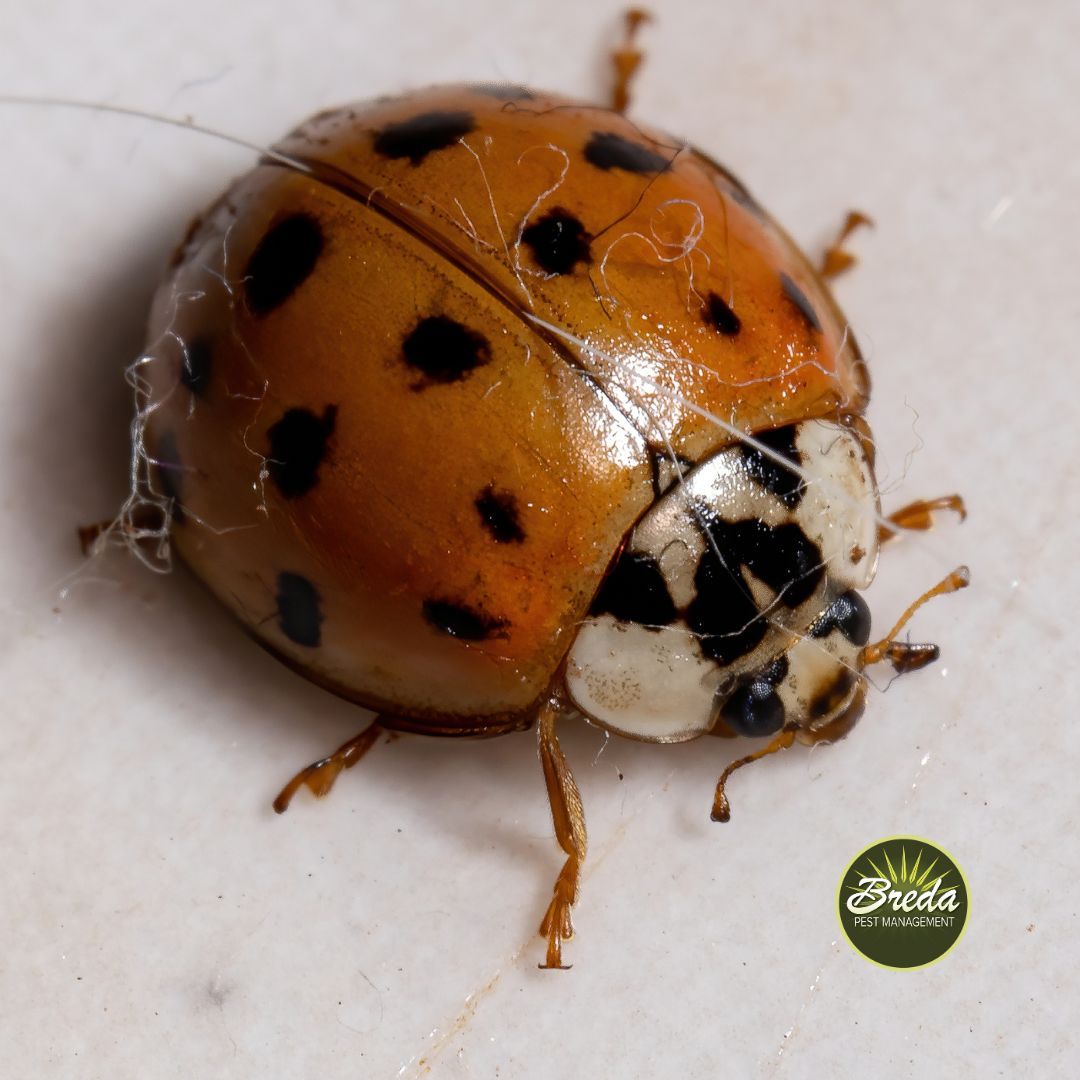
Asian lady beetles vs. native ladybugs: how to tell who's who
Origin
Asian lady beetles were introduced from Asia decades ago to help control crop pests like aphids. Georgia is among the states where releases occurred historically, and the species spread widely after that.
Native ladybugs, on the other hand, evolved naturally in North America.
Appearance
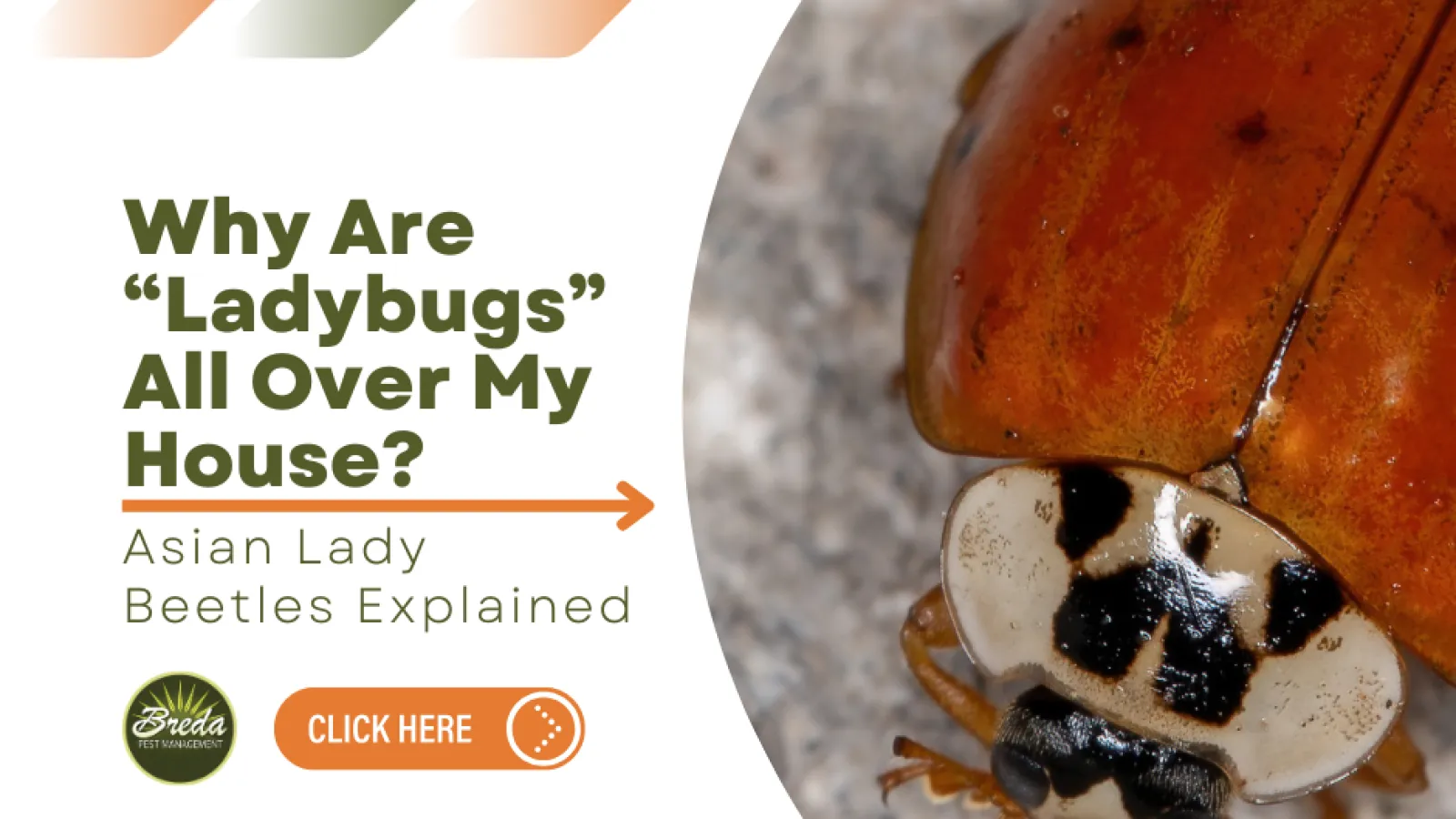
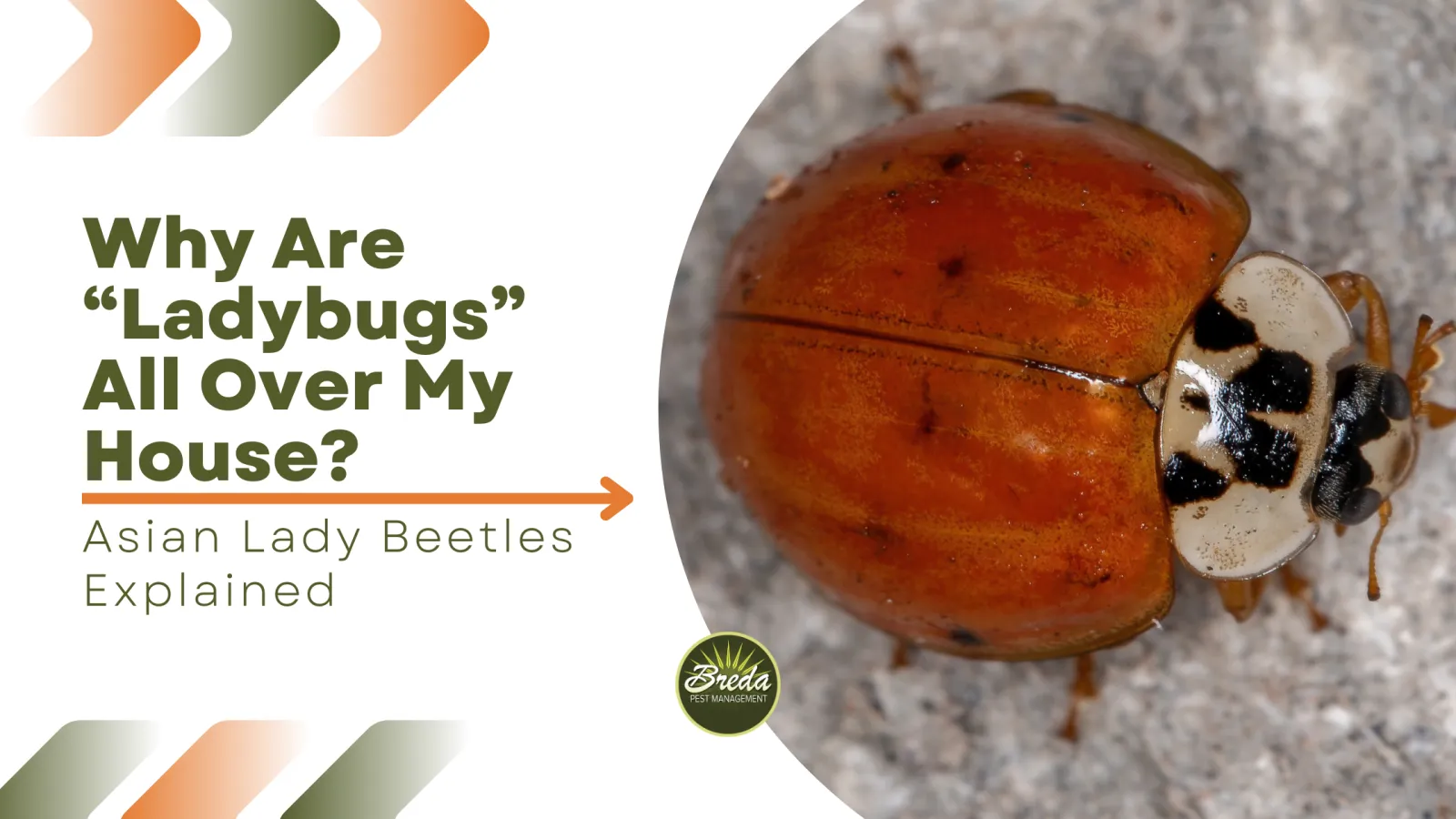
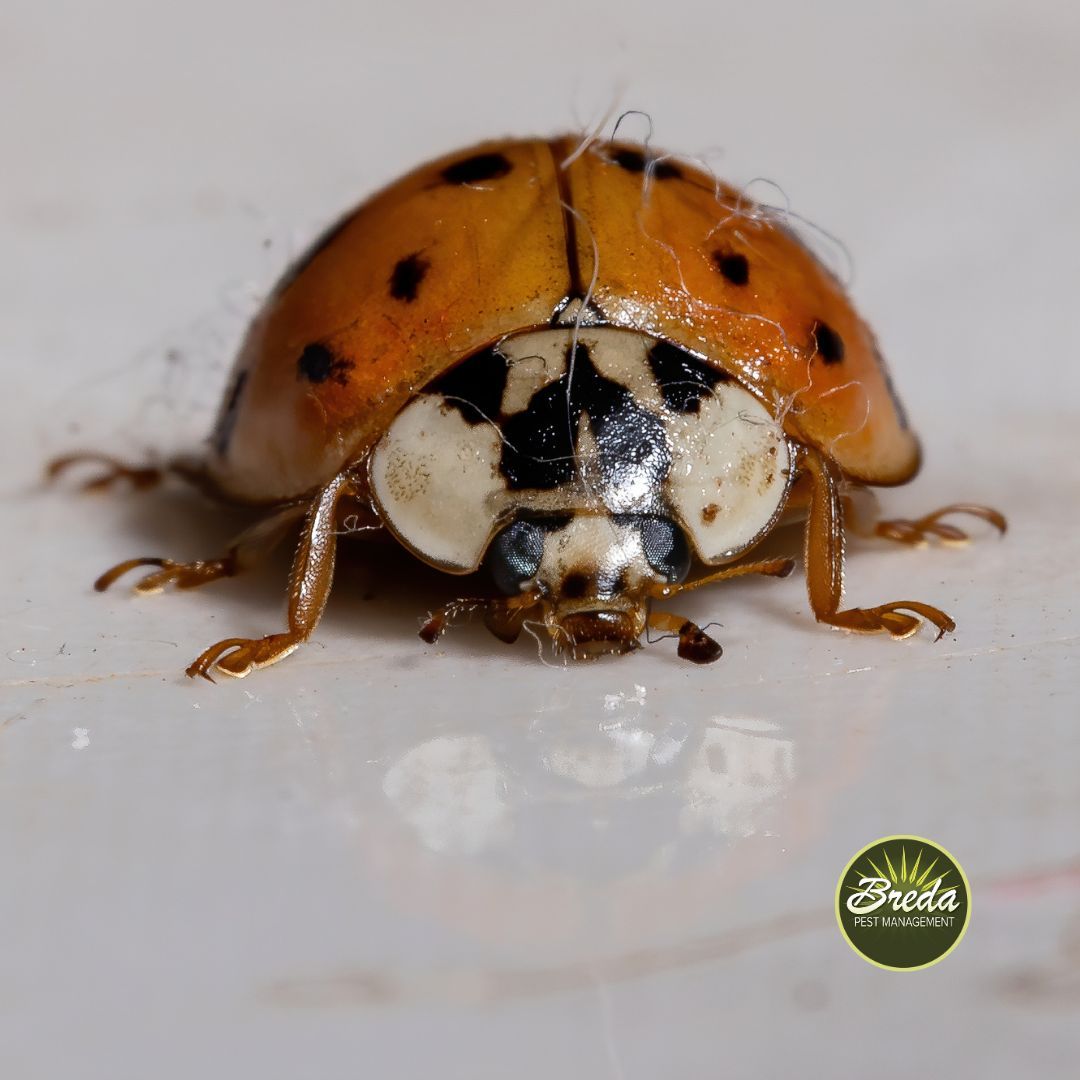
Asian lady beetles can look like they're wearing a disguise kit. They vary a lot in color—orange, red, yellow, even tan—with spots that may be bold⦠or barely there.
The most common clue: a black "M" or "W" marking on the light area behind the head
Behavior
This is the big one.
Asian lady beetles commonly invade homes in large numbers in fall to overwinter. Native ladybugs rarely do this.
If you've ever experienced what looks like a ladybug swarm-style situation—dozens of them clustered on sunny windows—it's usually these guys.
Biting + smell
Yes, Asian lady beetles can bite. It's usually a quick pinch when they're stressed or trapped against skin.
They can also release a yellowish, foul-smelling defensive fluid that can stain surfaces—especially if crushed.
Where they live outside (most of the year)
Here's the part that makes them mildly annoying and mildly impressive:
Asian lady beetles aren't trying to become indoor pets. They live outdoors most of the year in places with food, warmth, and cover—like:
Gardens and yards (especially where aphids hang out)
Trees and shrubs (maples, oaks, pines, fruit trees)
Fields and orchards
Leaf litter, wooded edges, and rocky areas
In spring and summer, they're often doing their "beneficial predator" job—feeding on aphids and other soft-bodied insects.
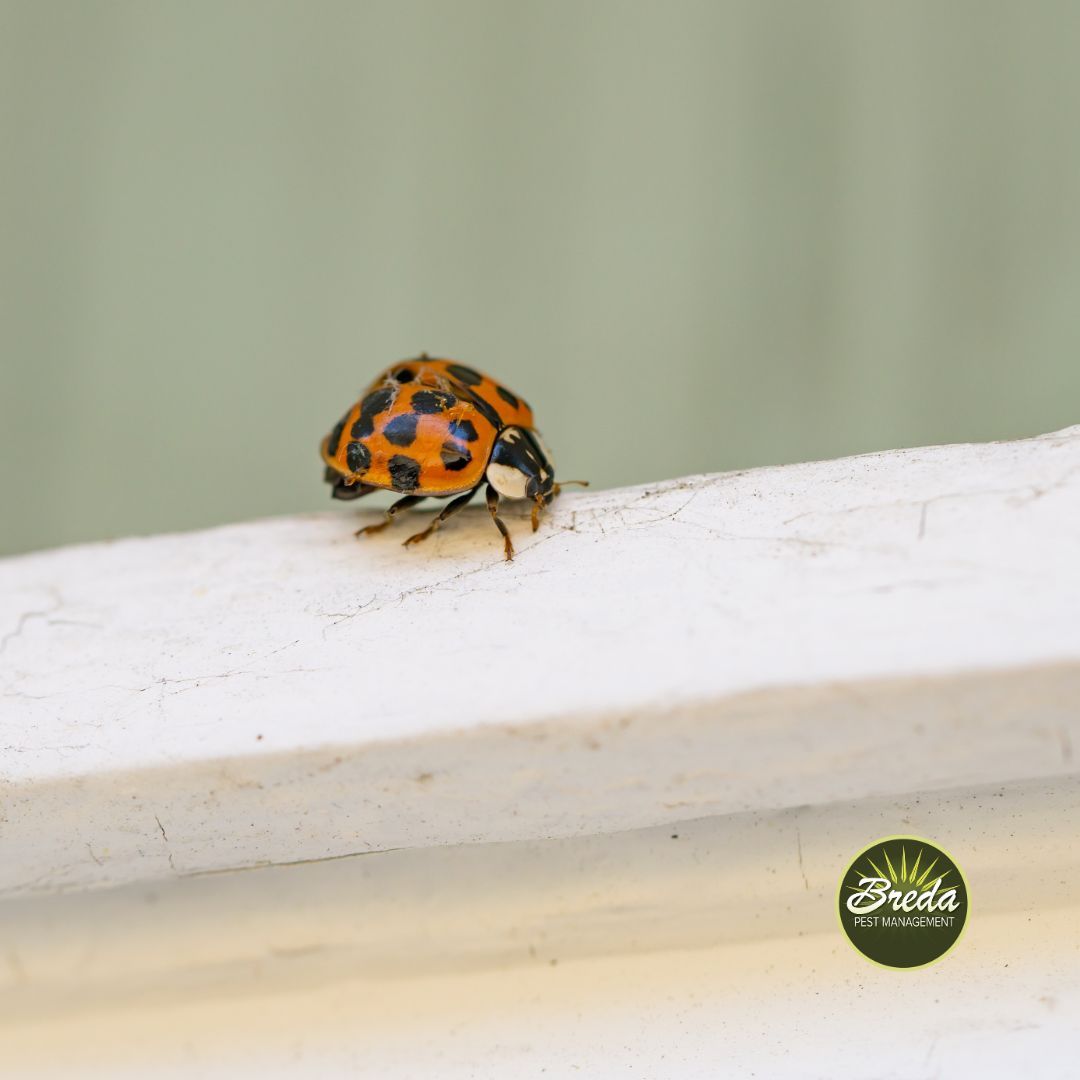
So⦠why are they on my walls?
Because your house looks like the perfect overwintering site.
In fall, adult beetles start searching for protected places to pass the winter. And they're drawn to:
Warm, sunny surfaces
Light-colored, sun-warmed walls
South and west-facing sides of buildings (hello, afternoon sun)
In nature, they'd tuck into rock crevices and bark cracks. But buildings mimic cliffs and rock faces—big, vertical, sun-warmed surfaces with tiny hiding places.
That's why Asian lady beetles in the Atlanta metro area are a real seasonal thing. It's not your imagination. It's biology.
How they get inside (and why it feels like they teleport)
Good news: they don't chew and they don't damage your structure.
They use existing openings like:
Cracks around windows and doors
Gaps in siding/trim
Vents (bathroom, attic, dryer, soffit)
Utility entry points (cables/pipes)
Damaged screens
They can fit through very small gaps, then settle into wall voids or attics to "wait out" winter. On warm days, they wake up and wander toward light—so you'll spot them near windows and lamps.
That's overwintering lady beetles in Atlanta GA in a nutshell.
The most important "don't panic" facts
If you're worried you've got a full-blown Asian lady beetle infestation situation, breathe:
They don't reproduce indoors
They don't eat wood, fabric, or pantry food
They're a nuisance, not a danger (unless you count emotional damage from surprise window clusters)
And we can confirm: there is no "seven years of bad luck" curse if one dies. That's a myth. Consider yourself spiritually cleared.
What to do right now if they're already inside
Vacuum them up (don't crush them). Crushing can trigger that staining, smelly defensive fluid. Vacuuming is the simplest way to remove them cleanly.
Empty the vacuum quickly. The odor can linger in the bag/canister if you let it sit.
Skip the foggers. Broad indoor spraying and "bug bombs" are generally not effective for the beetles hiding in walls/voids—and they're not worth the risk.
How to keep lady beetles from invading your home (the prevention checklist)
This is where you win.
Exclusion is one of the best long-term approaches:
Seal cracks with caulk around windows, doors, trim, fascia, siding
Repair screens and replace worn weatherstripping
Cover vents with fine mesh screening
Seal utility entry points where lines and pipes enter your home
Reduce bright outdoor lighting near entry points (less "come over here" energy at night)
If you want a deeper "walk around your house" guide, BREDA has a helpful winterizing/exclusion breakdown here: Winter Proofing Your Home: Exterior Sealing & Pest Exclusion.
Where BREDA comes in (especially when it keeps happening)
If you're seeing lady beetles invading your Atlanta GA home year after year—especially in big waves—it usually means there are easy entry points that need attention.
At BREDA, we don't do the old-school "spray and pray" approach.
Our pest control program focuses on:
Protecting the inside AND outside of your home
Precision placement of product (no baseboard spraying)
Targeted crack-and-crevice treatments to reduce exposure risk for kids and pets
A 90-day guarantee, including a free re-treatment if pests return during that window
Clear, scheduled appointment times (no mystery arrival "window") and respectful in-home service
If you want to see how BREDA approaches seasonal invaders like these (and their overwintering friends), check out this blog: Box Elder Bugs, Lady Beetles & Wasps: Don't Let Them Winter Inside Your Walls.
And if you're ready to talk through options, start with BREDA's Pest Control Program—it's built for the exact kind of seasonal whiplash Atlanta homes deal with.
Quick summary (because we know you're busy)
If you're Googling "Asian lady beetles in house Atlanta GA" or looking for pest control for Asian lady beetles, here's your takeaway:
They're attracted to warm, sunny sides of buildings in fall
They slip in through tiny gaps and overwinter in wall voids/attics
They don't reproduce indoors or destroy your home
The best fix is exclusion + smart prevention—and if it's a repeat issue, a professional inspection helps you find the real entry points
And yes⦠still no bad luck. Just beetles.
If you're tired of wondering what the pests in or around your home are doing and just want them gone, don't hesitate to give us a call. The BREDA Guarantee promises to protect your home and keep it protected—no matter the circumstances. Schedule an inspection online or give us a call at 770-466-6700.