
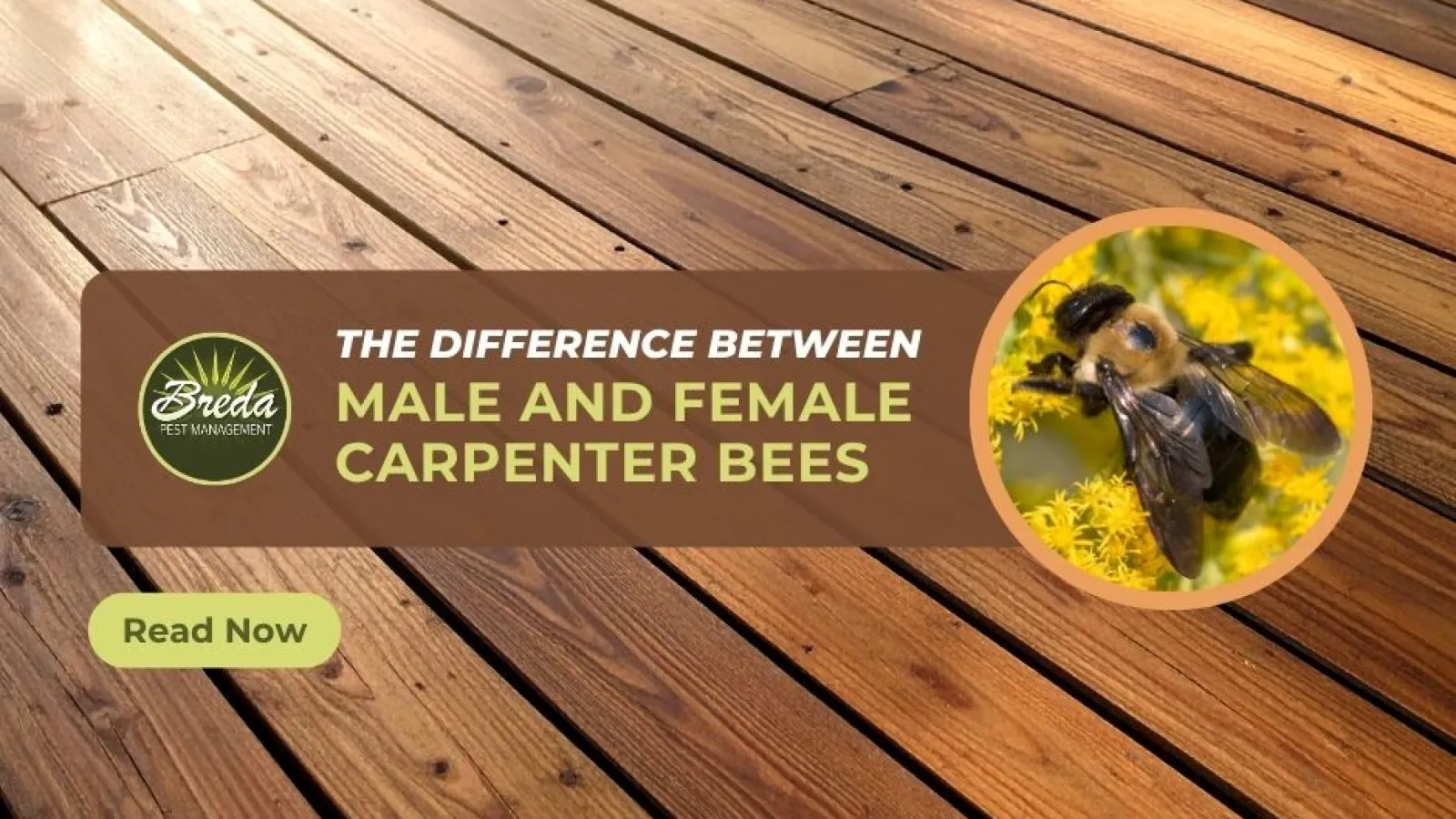
If you've ever had a large carpenter bee hovering around your porch like it pays the mortgage, you've probably had one very normal thought: Is this thing about to sting me?
Good news: maybe not. In fact, the carpenter bee making the biggest scene around your home is usually the one that cannot sting at all.
Carpenter bees are common throughout Georgia, especially in spring when temperatures rise and nesting season begins. Around Metro Atlanta, homeowners often notice them hovering near decks, porches, fascia boards, rooflines, fences, and other wooden areas. But before you panic, it helps to understand the difference between male and female carpenter bees in Atlanta GA, because each one plays a very different role.
One is the loud, dramatic security guard. The other is the one quietly doing the wood damage.
Let's break down male vs female carpenter bees in Georgia: how to tell them apart, which ones sting, which ones damage wood, and when it may be time to call BREDA Pest Management for professional pest control in Atlanta.
How To Tell Male And Female Carpenter Bees Apart
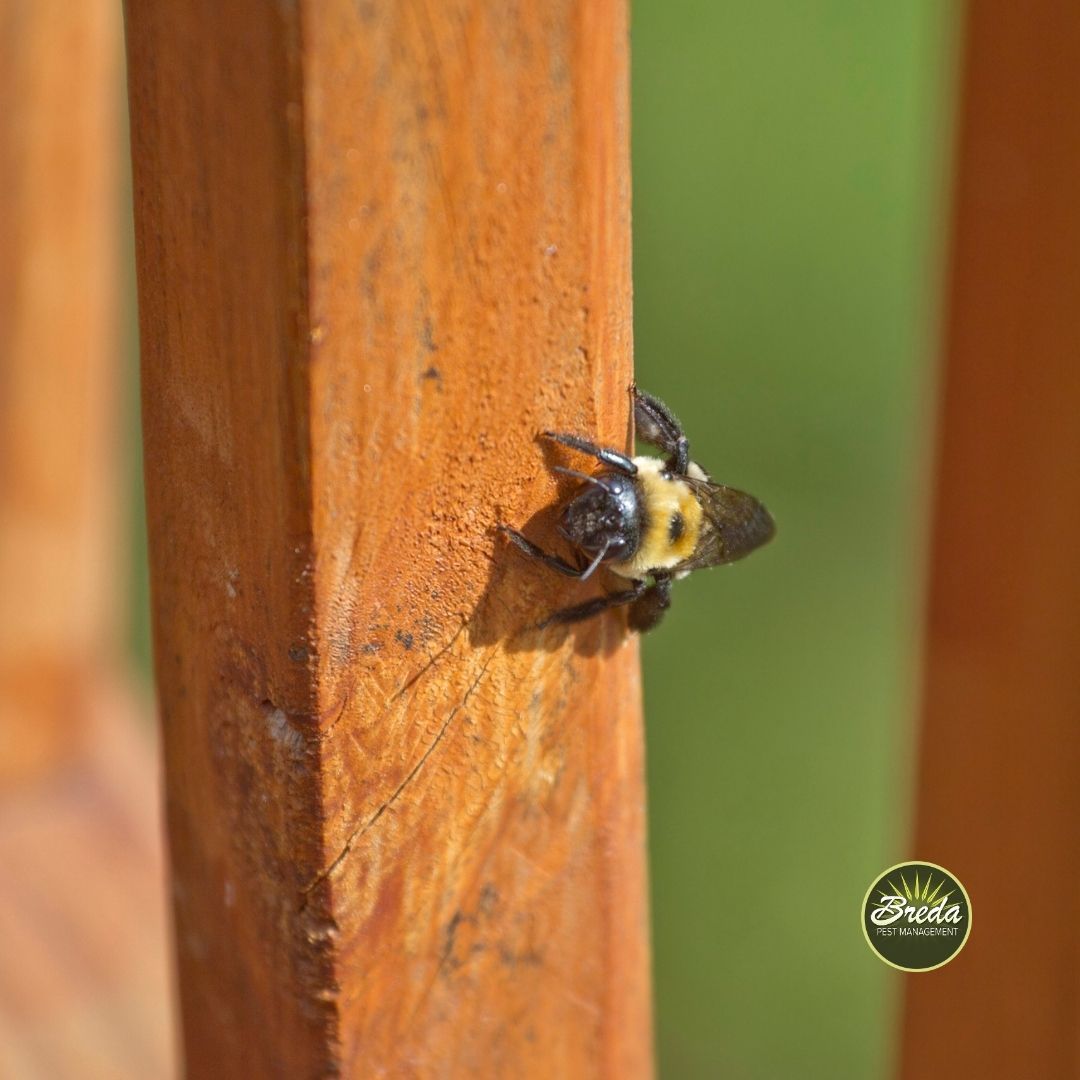
At first glance, male and female carpenter bees look very similar. Both are large, dark, and often mistaken for bumblebees. But once you know what to look for, the difference becomes easier to spot.
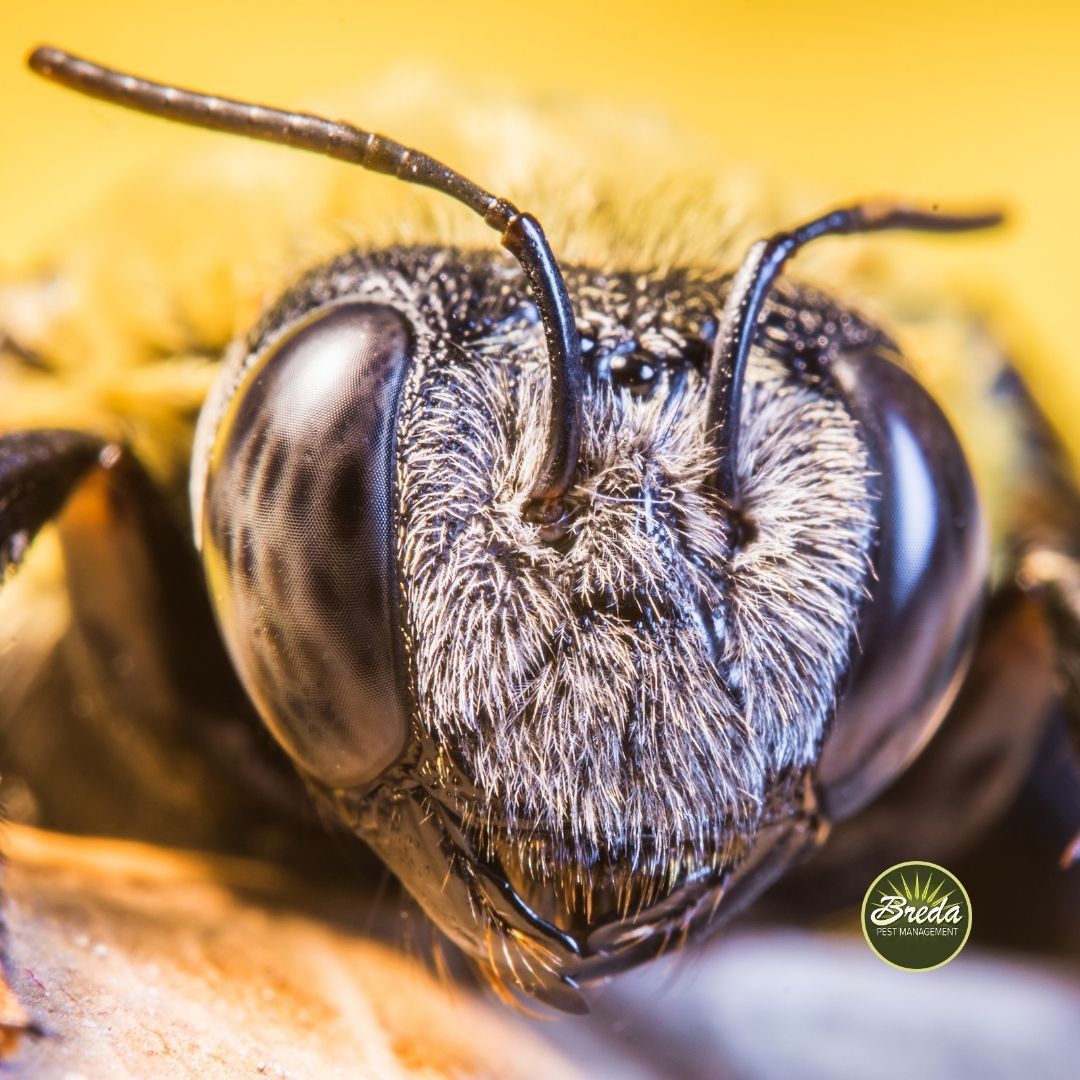
The simplest visual clue is the face.
Male carpenter bees usually have a light-colored patch on their face. This patch may look white, cream, or yellow. Female carpenter bees, on the other hand, typically have an all-black face.
Females may also appear shinier and more solid black, especially around the abdomen. Males can look slightly lighter or fuzzier in comparison.
This matters because the bee you see hovering near your porch may look intimidating, but if it has that lighter facial marking, it is likely a male. And male carpenter bees are all bluff.
According to University of Georgia Extension, the male carpenter bee is often the one homeowners see hovering threateningly, but males do not have stingers and cannot harm you. Females can sting, but usually only if handled or stepped on.
Do Carpenter Bees Sting In Georgia?
This is one of the most common homeowner questions: do carpenter bees sting Georgia residents, pets, or kids?
The answer depends on whether the carpenter bee is male or female.
Male carpenter bees cannot sting. They do not have stingers. So even though they may fly close, hover aggressively, or seem like they are "dive bombing" people and pets, they are not actually able to sting.
Female carpenter bees can sting, but they rarely do unless they are directly handled, trapped, or threatened. Purdue Extension explains that female carpenter bees do have stingers, but they seldom use them unless provoked. Male carpenter bees, despite their territorial behavior, cannot sting at all.
That distinction is important because male carpenter bees are usually the ones causing the most panic. They hover. They patrol. They act personally offended that you're standing on your own deck. But they cannot back up the attitude.
Females are quieter and more focused. They are less likely to put on a show, but they are the ones homeowners should pay closer attention to because they are responsible for nesting activity and wood damage.
Why Male Carpenter Bees Hover Around Your House
If you're seeing male carpenter bees hovering around, it usually means they're guarding territory during mating season.
Male carpenter bees patrol areas where females may be nesting or emerging. They often hover around people, pets, windows, decks, and porch railings, which can make them seem aggressive. But this behavior is mostly territorial display. It's not an attack. It's a bluff.
Think of the male carpenter bee as the tiny bouncer of the deck. Very committed. Very dramatic. Completely unable to sting.
This is why homeowners often notice males first. They are louder, more visible, and more confrontational. But as intimidating as they seem, they are not the ones drilling holes into your home.
Which Carpenter Bees Damage Wood?
When homeowners ask which carpenter bees damage wood on Georgia homes, the answer is clear: female carpenter bees are responsible for the wood damage.
Female carpenter bees drill nearly perfect round holes into wood so they can create tunnels for nesting. These tunnels are where they lay eggs and prepare food for their larvae.
Males don't drill into wood, or create tunnels, or help build the nest. They are simply nearby to mate and guard territory.
So even though males are more visible, females are the ones behind the carpenter bee damage Atlanta GA homeowners may notice around decks, porches, fences, and other exterior wood.
University of Maryland Extension notes that female carpenter bees are attracted to raw, unfinished, stained, or weathered wood when searching for a nest site, while well-maintained painted wood is less likely to be attacked.
This is one reason carpenter bees can be frustrating for Georgia homeowners. You may have stained wood and still see bee activity because stain is not always enough to make wood "bee-proof." Carpenter bees are especially drawn to softwoods and weathered areas where drilling is easier.
What Does Carpenter Bee Damage Look Like?
Female carpenter bees typically drill round holes about ½ inch in diameter. These holes may look surprisingly clean, almost like someone used a small drill bit.
Common signs of carpenter bee activity include:
- Perfectly round holes in wood
- Sawdust-like material beneath the hole
- Yellowish staining near the entry point
- Bees returning to the same spot repeatedly
- Woodpecker damage near carpenter bee holes
- Activity around decks, eaves, fascia boards, and porch ceilings
Carpenter bees do not eat wood like termites. Instead, they excavate it. That means they tunnel through wood to create nesting chambers.
Over time, especially when carpenter bees return to the same nesting sites year after year, these tunnels can expand. University of Illinois Extension explains that carpenter bee holes do not usually cause serious structural damage right away, but repeated use over several years or multiple nests in the same piece of wood can compromise the wood's integrity.
So while one carpenter bee hole may not be a five-alarm emergency, repeated nesting should not be ignored.
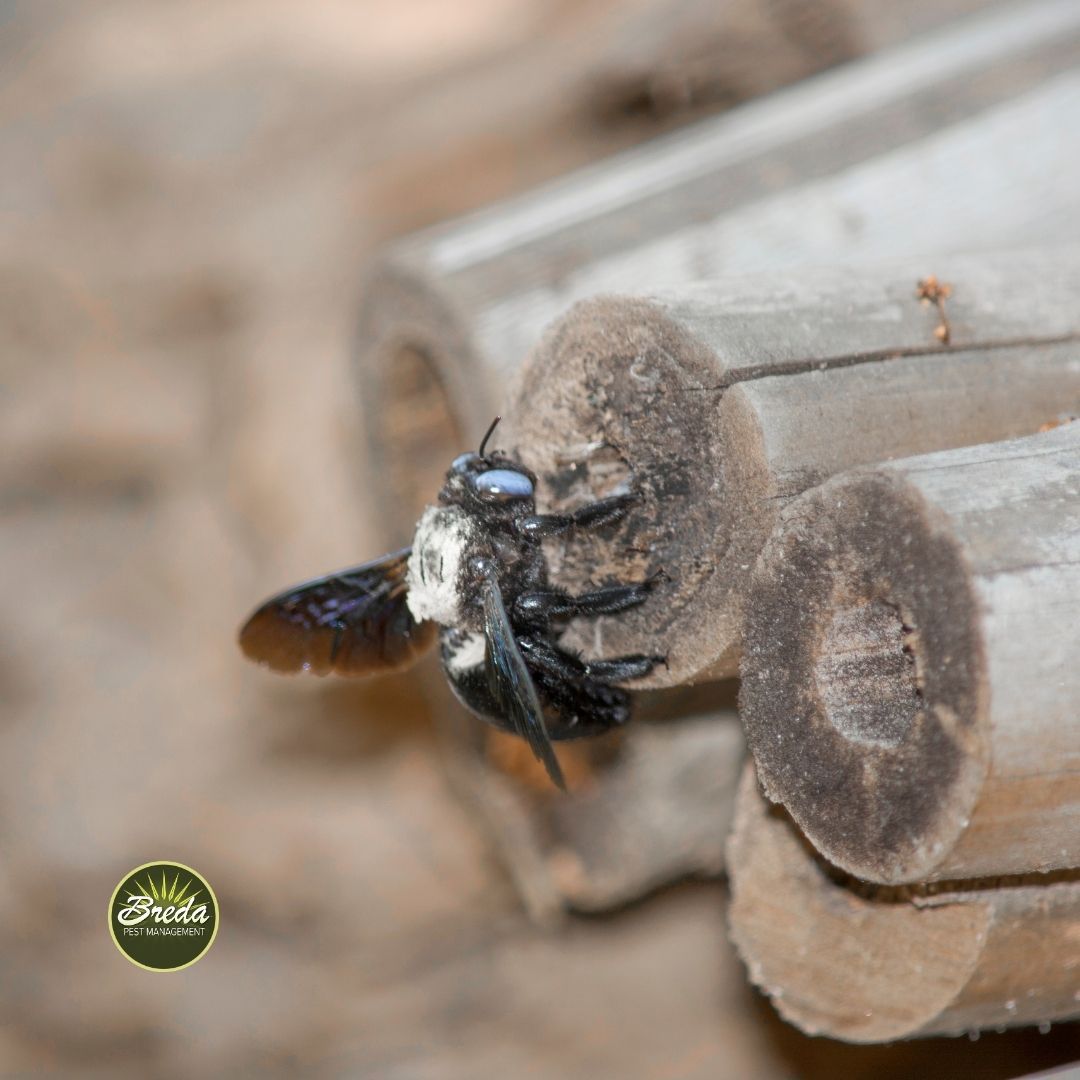
The Carpenter Bee Reproductive Cycle
The reproductive cycle is where the male and female carpenter bee roles become even more different.
In spring, adult carpenter bees emerge from overwintering. This is when homeowners across Georgia tend to notice more activity. Males begin patrolling territory and looking for mates, while females search for suitable wood surfaces where they can create nests.
Once a female chooses a nesting site, she drills into the wood and creates a tunnel. Inside that tunnel, she lays eggs in individual chambers and provides pollen for the larvae to feed on after they hatch.
UGA Extension explains that female carpenter bees bore tunnels in wood structures, lay eggs in a series of cells, and cap those cells with pollen that serves as food for the larvae.
The male's job is much simpler: mate and guard territory. Once mating is complete, male carpenter bees don't assist with raising the young, or gathering pollen for the larvae, or maintaining the nest.
Honestly, classic.
Are Carpenter Bees Dangerous?
Carpenter bees are generally low-risk to humans, especially once you understand the difference between males and females. Males cannot sting, and females rarely sting unless threatened.
However, carpenter bees can still become a problem around your home because of their nesting habits.
The real concern is not usually personal safety. It is property damage.
Repeated nesting can lead to weakened wood, cosmetic damage, moisture concerns, and secondary damage from woodpeckers that peck into wood looking for carpenter bee larvae.
When To Call BREDA For Carpenter Bee Control
If carpenter bees are hovering around your home, drilling into wood, or returning to the same areas each spring, professional help can make a difference.
BREDA Pest Management provides comprehensive pest control services designed to protect both the inside and outside of your home. BREDA's approach targets pests where they live, nest, and travel, while creating a strong protective barrier outside. Our services are customized to your home and the specific pest pressures caused by Georgia's warm, humid climate.
BREDA can help identify active carpenter bee activity, treat problem areas, and provide guidance to help prevent future infestations. Our pest control service is also family and pet conscious. Our team uses targeted treatments and precise product placement instead of outdated, messy baseboard spraying. We also inspect vulnerable areas and back our pest control service with the BREDA Guarantee.
The Bottom Line For Georgia Homeowners
Male carpenter bees may be the ones causing all the drama, but they are not the ones damaging your home. Female carpenter bees are quieter, less noticeable, and much more purposeful. They are the ones creating tunnels, laying eggs, and causing the wood damage homeowners need to watch for.
So if you're trying to figure out whether the carpenter bee around your porch is a threat, start with the face. A light-colored face usually means male. An all-black face usually means female. And if you're seeing round holes, sawdust, staining, or repeated activity around wood surfaces, it may be time to schedule service.
BREDA Pest Management helps Atlanta-area homeowners protect their homes from seasonal pest problems, including carpenter bees. If carpenter bees are making themselves comfortable around your home, contact BREDA Pest Management and let the experts help you take care of the problem before those small holes become a bigger headache.
If you find yourself needing pest control and want it handled thoroughly, don't hesitate to give us a call. The BREDA Guarantee promises to fix your pest problem and keep it fixed—no matter the circumstances. Schedule a consultation online or give us a call at 770-466-6700.