
If you've stepped onto your porch, deck, or back patio lately and noticed a large bee hovering a little too close for comfort, you are not alone.
May is prime time for carpenter bee activity in Georgia, which means homeowners across Metro Atlanta may suddenly start seeing big, bumblebee-looking insects hovering near rooflines, fascia boards, decks, fences, pergolas, and other wooden areas around the home.
And because carpenter bees are not exactly subtle, they tend to raise a very fair question: "Should I be panicking?"
The short answer? Don't panicâ¦but definitely be aware.
Carpenter bees are beneficial pollinators. But when they decide your home is the perfect place to build a nest, they can become a springtime nuisance. Over time, their drilling and tunneling can lead to visible wood damage, repeat nesting issues, and even extra damage from woodpeckers looking for larvae.
So let's talk about what carpenter bees are, why they show up in May, where they like to nest, and when it may be time to search for carpenter bee control near you to call in a professional.
What Are Carpenter Bees?
Carpenter bees are large, solitary bees commonly found throughout Georgia. The most common species locally is the Eastern carpenter bee, also known as Xylocopa virginica. According to the University of Georgia Extension, the large carpenter bee is the most common carpenter bee species found in Georgia, and adult females bore into wood to create nesting tunnels.
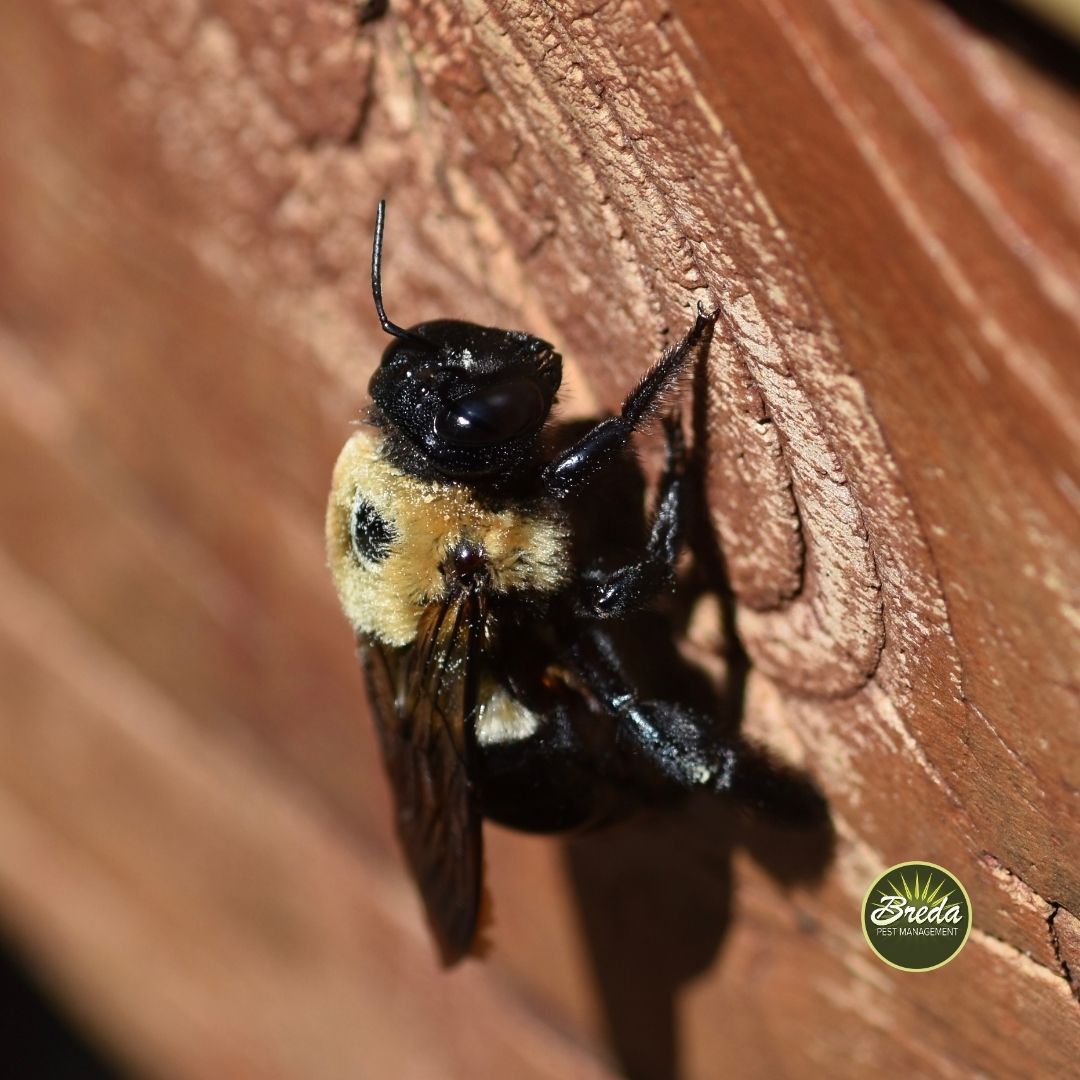
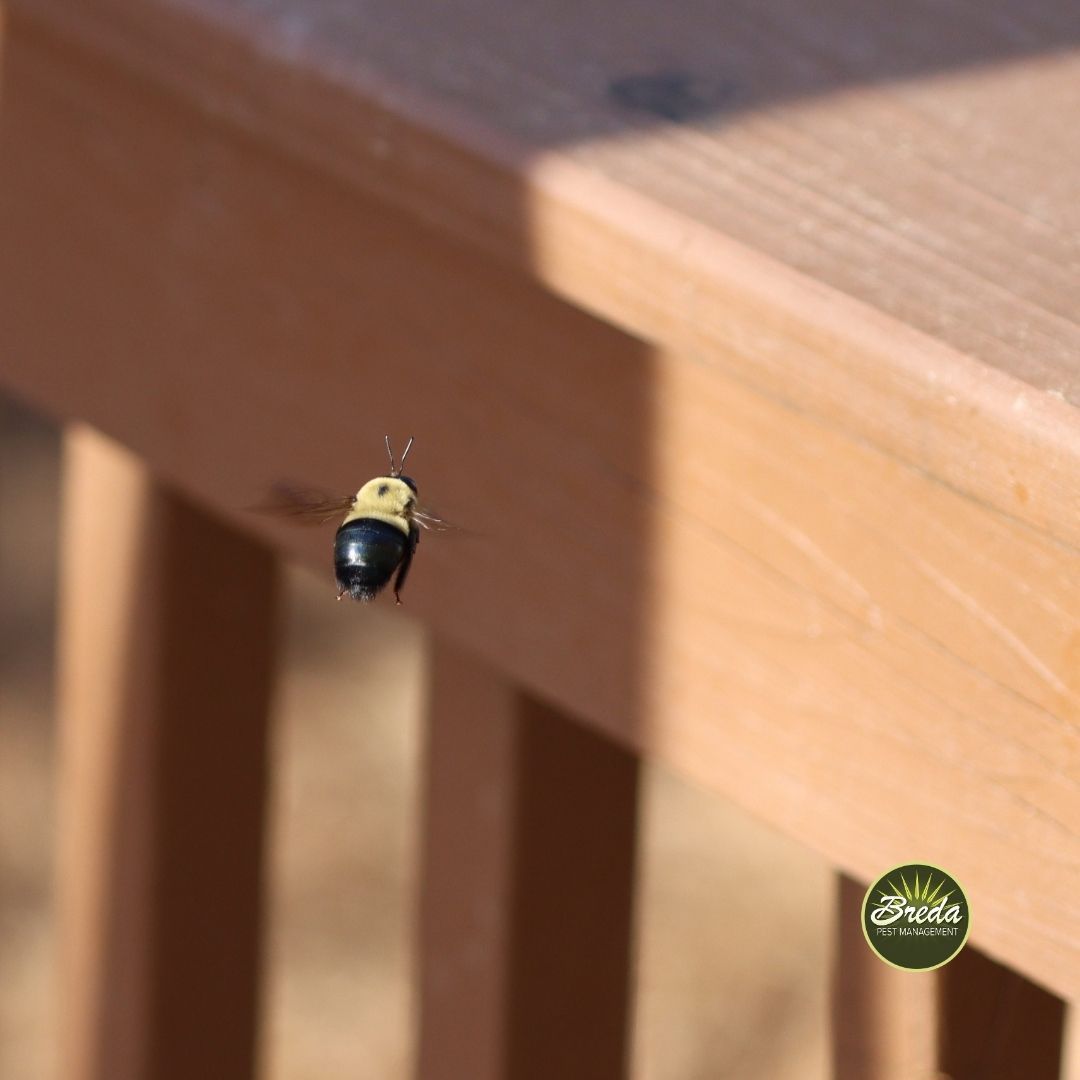
At first glance, carpenter bees look a lot like bumblebees. They're big. They're black and yellow. They make a loud buzz that can instantly make you rethink your peaceful morning coffee on the porch.
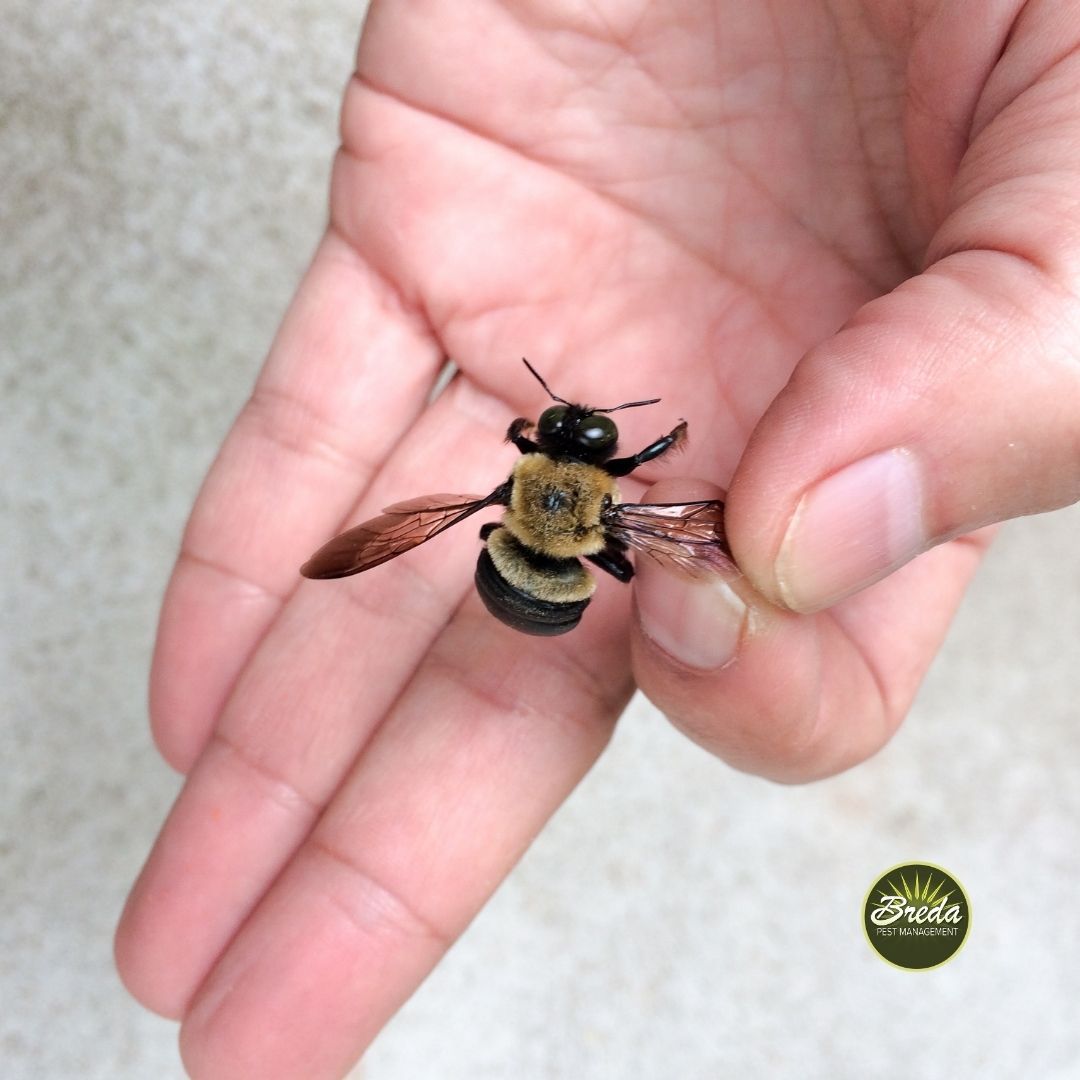
But there is one easy way to tell them apart: carpenter bees usually have smooth, shiny black abdomens, while bumblebees have fuzzy, hairy abdomens. The University of Kentucky Entomology department notes that carpenter bees resemble bumblebees but typically have shiny, hairless abdomens, while bumblebees usually have hairy abdomens with black and yellow stripes.
Unlike honey bees, carpenter bees do not live in large colonies. Each female carpenter bee creates her own nest by drilling into wood and building out tunnels where she can lay her eggs.
So yes, they are bees. Yes, they help with pollination. But no, they're not the kind of bees you want casually renovating your deck.
Why Are Carpenter Bees Showing Up In May?
There is a reason May carpenter bee activity in Atlanta GA becomes such a noticeable issue for homeowners.
In Georgia, May marks peak activity season because temperatures are consistently rising and adult carpenter bees have emerged from overwintering. By late April into May, they are active, visible, and busy with mating and nesting.
That is why you may suddenly notice more hovering near wooden structures or see bees repeatedly returning to the same area. It is not random. It is nesting season.
During this time, female carpenter bees look for suitable wood to drill into, while males hover nearby to protect the area. This is also when homeowners may spot the classic perfectly round holes in wood surfaces.
And here's the part that makes carpenter bees especially dramatic: the males may aggressively hover near people, pets, and structures, but they cannot sting. Their behavior is territorial, not dangerous.
Female carpenter bees can sting, but they are generally not aggressive unless handled or directly threatened. So while the hovering can feel intimidating, carpenter bees are considered relatively low-risk to people.
Your house, however, may have a different opinion.
Where Do Carpenter Bees Nest?
When it comes to carpenter bees nesting in wood, they are not choosing homes at random.
Carpenter bees prefer bare, untreated, weathered, or softened wood. UGA Extension notes that carpenter bees are especially attracted to redwood, cedar, cypress, and pine, particularly when the wood is old and unpainted.
Around Georgia homes, common carpenter bee nesting spots include:
- Deck railings
- Porch ceilings
- Fascia boards
- Eaves
- Pergolas
- Fence posts
- Wooden siding
- Outdoor furniture
- Sheds
- Playsets
Female carpenter bees drill nearly perfect round holes, usually about ½ inch in diameter. Once inside, they create tunnels where they lay eggs. And while they do not eat the wood like termites, they do excavate it.
That difference matters.
Carpenter bees are not consuming your home from the inside out, but they are physically boring into wood. Over time, especially when they return to the same nesting areas year after year, those tunnels can expand and weaken the wood.
That is when carpenter bee damage on Georgia homes becomes a real concern.
Will Carpenter Bees Drill Into Stained Wood?
Yes, they can.
This surprises a lot of homeowners because stained wood feels "finished." But stain is usually not enough to make wood bee-proof.
Carpenter bees prefer soft, bare, weathered, or untreated wood, but stained wood can still be vulnerable, especially if the wood is cedar, pine, redwood, or another softwood. If the stain has faded, weathered, or left any exposed areas, carpenter bees may still find it attractive.
Painted or well-sealed wood tends to be less attractive, but even then, prevention is not always perfect. Once carpenter bees find a nesting site they like, they may return to it again in future seasons.
That is one reason early carpenter bee treatment Atlanta suburb homeowners can trust is helpful during peak activity. The sooner you address active nesting, the easier it is to limit repeated damage.
Should Georgia Homeowners Be Concerned About Carpenter Bees?
Here is the balanced answer: carpenter bees are not usually an emergency, but they should not be ignored.
They are generally low-risk to humans. In fact, carpenter bees have a funny habit called "nectar robbing," where they sometimes cut into flowers to access nectar more quickly instead of entering the flower the usual way. UC Agriculture and Natural Resources describes nectar robbers as insects or other visitors that pierce or bite into a flower to remove nectar.
Honestly, carpenter bees are very much the "work smarter, not harder" type.
But around your home, their nesting habits can become a problem.
Repeated carpenter bee infestations can lead to visible wood damage, structural weakening over time, and costly repairs. UGA Extension explains that female carpenter bees bore tunnels into wooden structures to raise larvae, and this process can sometimes compromise the integrity of wooden structures.
There is also another issue: woodpeckers.
Carpenter bee larvae can attract woodpeckers, which may peck into wood to reach the larvae inside. So what starts as a small, round carpenter bee hole can turn into larger, messier damage caused by birds.
In other words, the bee itself may not be highly dangerous, but the damage cycle can get expensive if it continues unchecked.
How To Get Rid Of Carpenter Bees In Georgia
If you are wondering how to get rid of carpenter bees in Georgia, the first step is identifying if you have active nesting.
Look for:
- Large bees hovering near wood surfaces
- Perfectly round holes in wood
- Sawdust-like material beneath the hole
- Yellowish staining near the entry point
- Repeated bee activity around the same area
- Woodpecker damage near existing holes
For minor prevention, homeowners can help reduce carpenter bee activity by keeping exterior wood painted, sealed, and well-maintained. Replacing severely weathered or damaged wood may also help reduce future nesting.
But if carpenter bees are already actively drilling, it is best to be careful with DIY treatments. Plugging holes too early, without addressing active bees or larvae inside, may not solve the problem and can sometimes lead to continued activity elsewhere.
That is where professional carpenter bee pest control services can make a big difference.
When To Call BREDA Pest Management
If carpenter bees are hovering around your porch, drilling into your deck, or returning to the same areas year after year, BREDA Pest Management can help.
BREDA provides pest control services in Atlanta that are customized to your home and the specific pest pressures caused by Georgia's warm, humid climate. Their team focuses on proven methods designed to stop infestations at the source and help prevent future pest problems.
BREDA's pest control treatments are also family and pet conscious, with a focus on protecting both interior living spaces and the exterior perimeter of the home. And instead of a one-size-fits-all approach, BREDA customizes treatment based on the pest issue and the home itself.
That matters when you are dealing with carpenter bees because every home is a little different. A newer home with painted trim may have different vulnerabilities than an older home with weathered fascia boards, exposed deck rails, or untreated porch ceilings.
Don't Let Carpenter Bees Make Themselves At Home
Carpenter bees may be fascinating, but they are not exactly ideal houseguests.
If you are seeing large bees around your home this May, pay attention to where they are hovering. Check wood surfaces for round holes. Look for sawdust beneath decks, eaves, and railings. And if you are seeing signs of nesting, do not wait until small holes become bigger repairs.
May is the right time to act because this is when carpenter bees are most active in Georgia.
BREDA Pest Management has been helping protect Metro Atlanta homes since 1975, and their team knows how Georgia's seasonal pest pressures affect local homeowners. If carpenter bees are making your home their spring project, schedule service with BREDA Pest Management and take back your porch, deck, and peace of mind.
If you're tired of wondering what the pests in or around your home are doing and just want them gone, don't hesitate to give us a call. The BREDA Guarantee promises to protect your home and keep it protected—no matter the circumstances. Schedule an inspection online or give us a call at 770-466-6700.