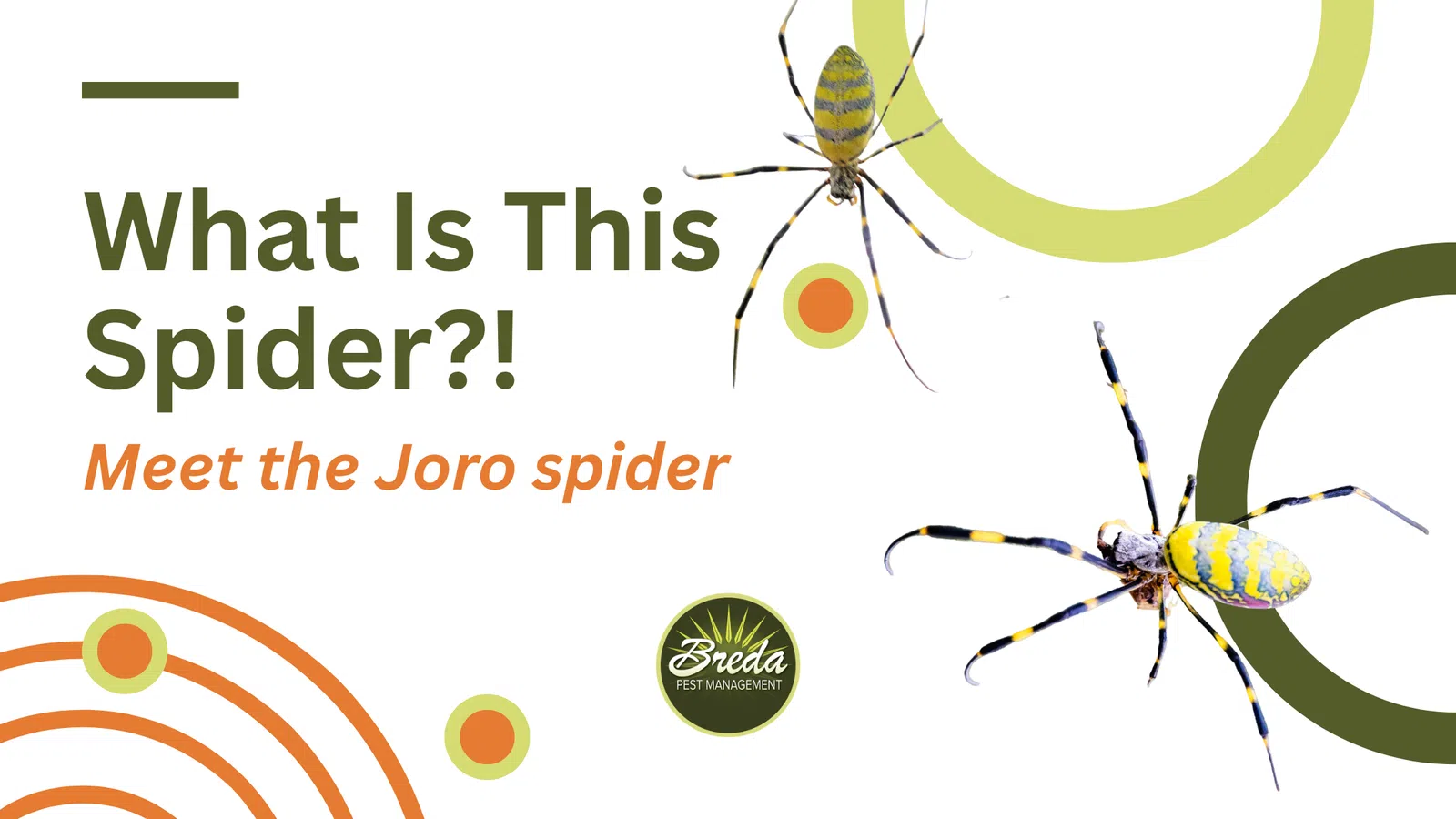
Joro spiders have become a familiar late summer and fall sight across Metro Atlanta. Their bright markings, long legs, and enormous golden webs make them nearly impossible to ignore. They also build those webs right where you need to walk. Naturally.
So, what is this spider? Is it dangerous? And what can you do when a Joro spider decides your deck is now their deck?
What Is a Joro Spider?
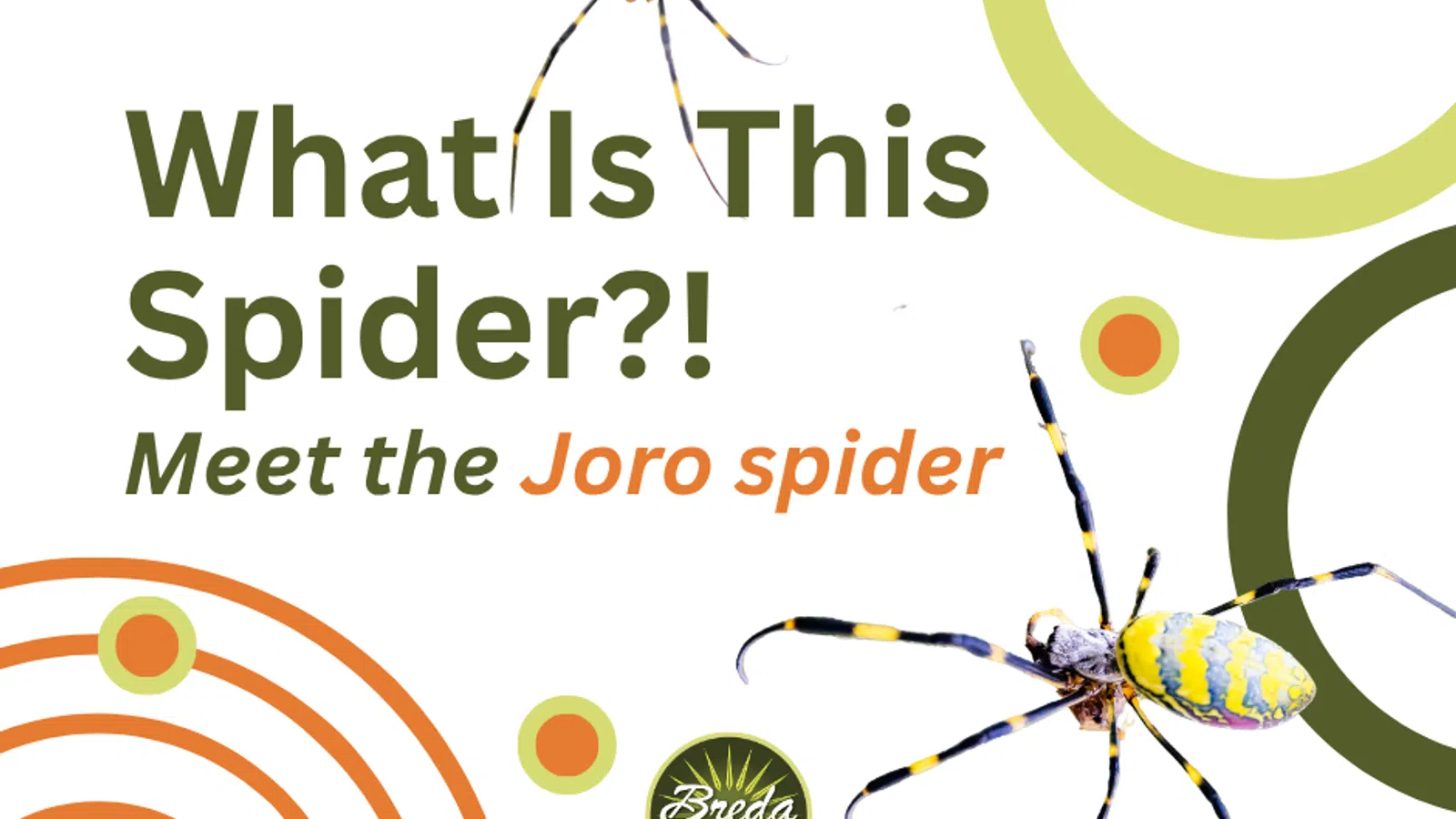
The Joro spider, or Trichonephila clavata, is a large orb-weaving spider native to East Asia. It was first confirmed in the United States in northeast Georgia in 2014 and has continued spreading across Georgia and neighboring states.
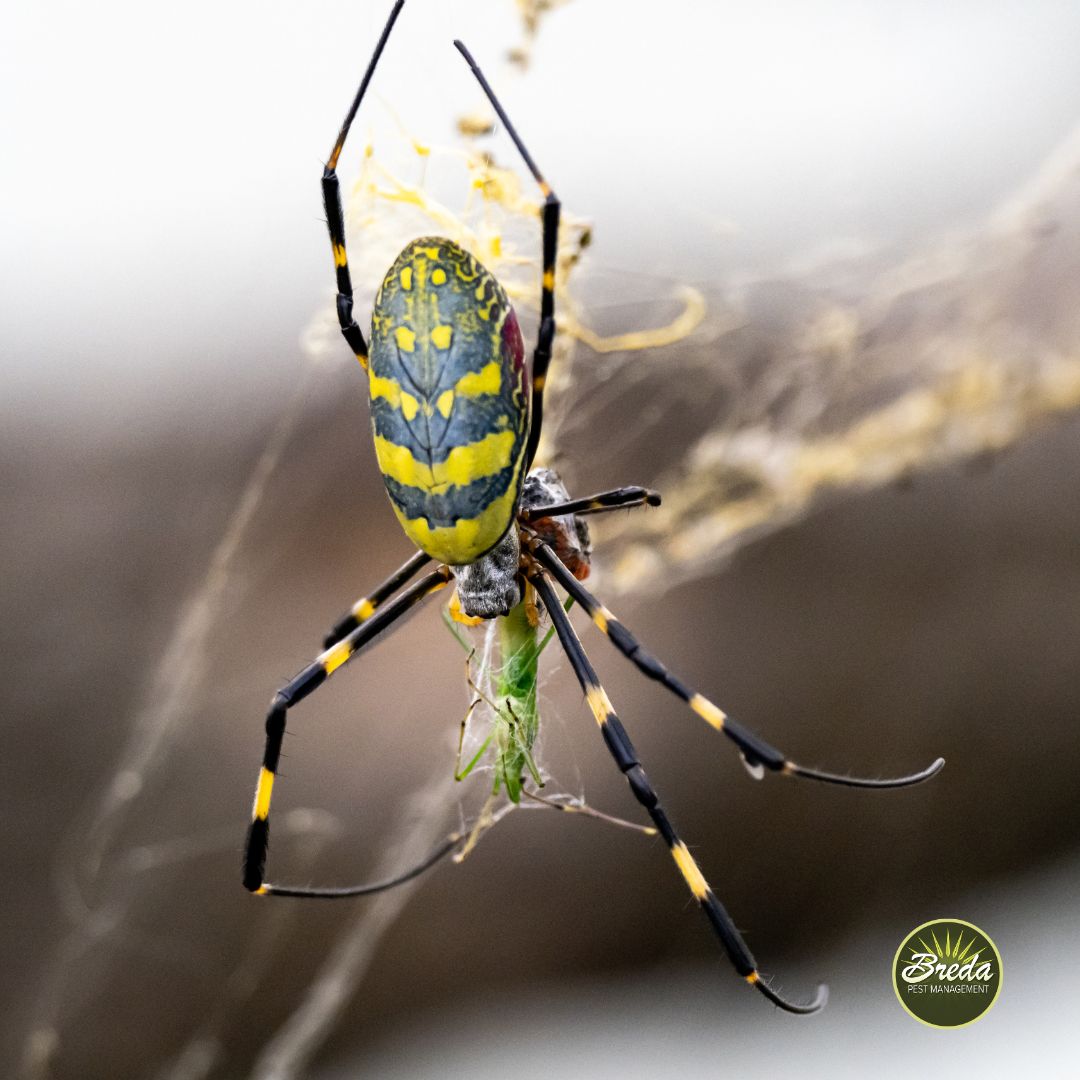
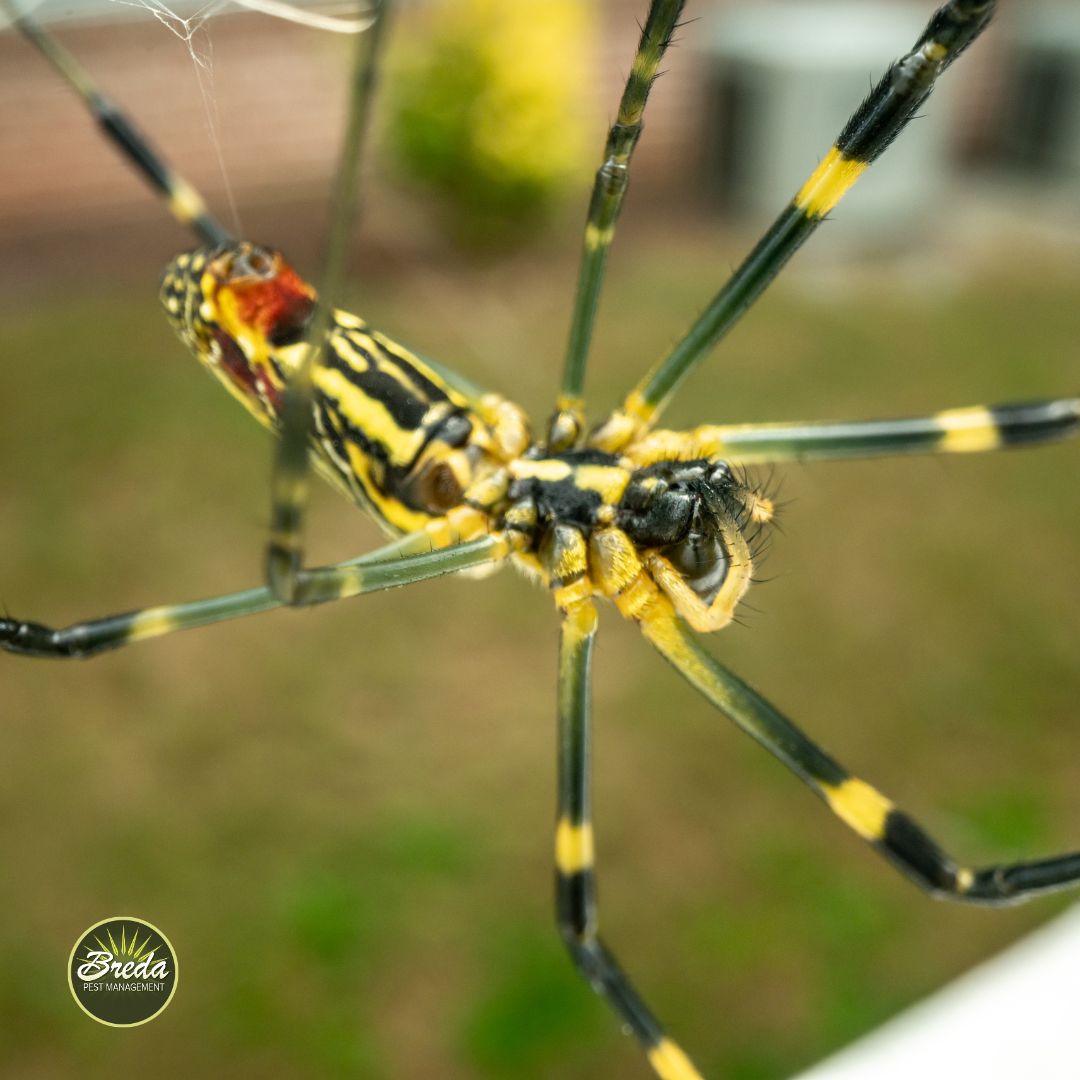
Adult females are the ones most people notice. Their bodies are patterned in yellow, black, blue-green, and red, and their leg span can reach approximately four inches. Males are much smaller and less colorful.
According to UGA Cooperative Extension's guide to managing Joro spiders, mature females produce strong, golden silk and may build webs spanning 10 feet or more.
Are Joro Spiders Dangerous?
Joro spiders look intimidating, but they are not considered medically dangerous to people.
Like most spiders, they have venom for subduing prey. However, Joro spiders are extremely timid and are unlikely to bite unless trapped or handled. Their first response is usually to remain still, retreat, or drop away. That spider over your patio is not preparing an attack. She's probably hoping you'll stop staring at her.
A Joro spider bite is possible, but rare. Anyone experiencing a severe or unusual reaction after a suspected bite should contact a healthcare provider. Recent UGA Extension guidance on Joro spiders also notes that their venom is not considered harmful to humans.
When and Where Do Joro Spiders Appear?
Joro spiders spend the winter as eggs. The spiderlings typically hatch during April and May, grow throughout the summer, and become much easier to recognize by August and September.
Females lay fuzzy, silk-covered egg masses during the fall. Each mass can contain several hundred to more than 1,000 eggs. The adults die as colder weather arrives, but the eggs remain protected until spring.
There is one generation each year, which explains why they disappear over winter and return with several hundred friends.
Around Georgia homes, Joro spiders commonly build webs:
- Between trees and large shrubs
- Beneath roof eaves
- Near porches, decks, and patios
- Across walkways and driveways
- Around sheds and playsets
- Along wooded property edges
- In flower gardens and landscaping beds
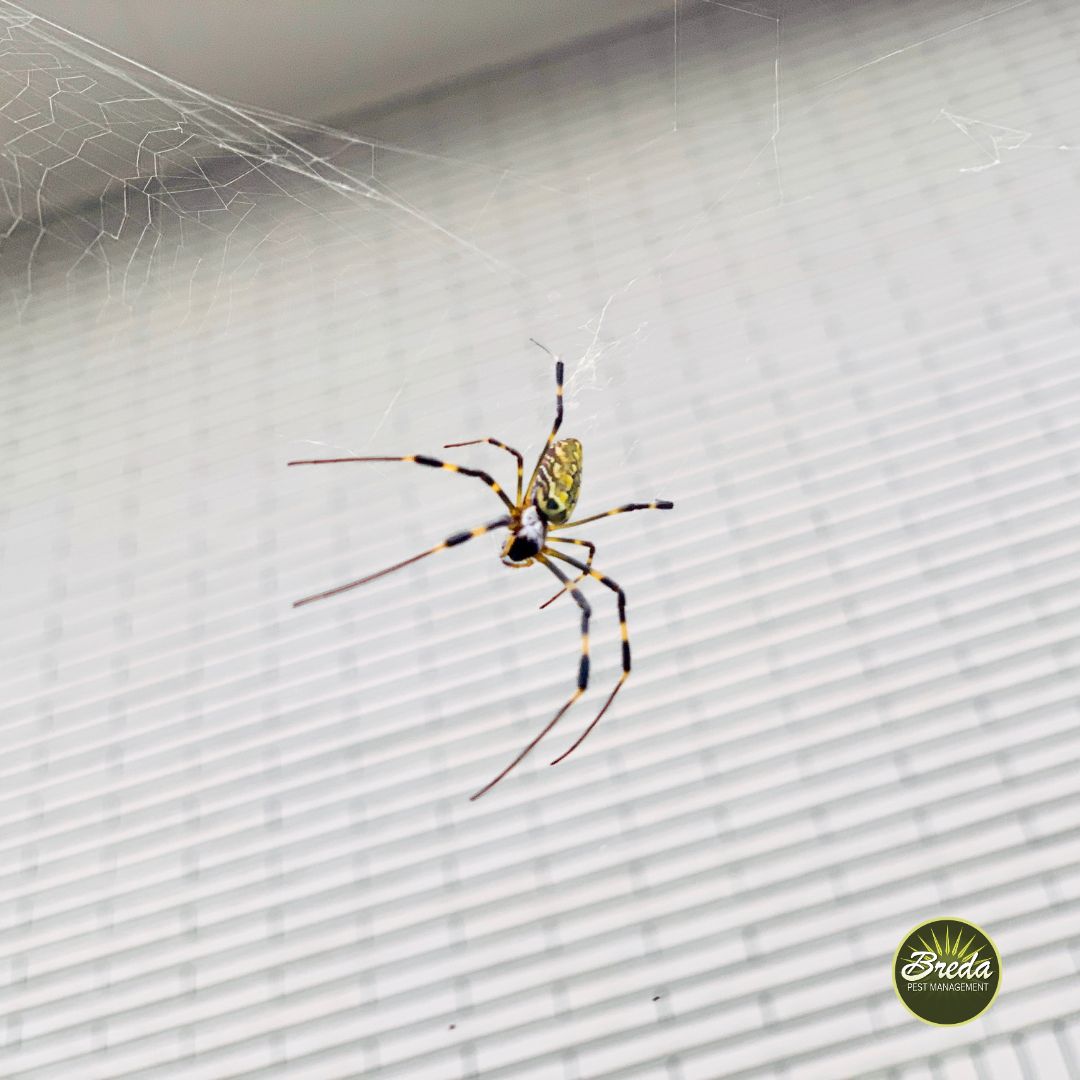
They do not usually seek shelter inside homes. The biggest problem is their habit of putting large, sticky webs in high traffic areas.
Walking through one at face level tends to make the spider's threat level feel considerably higher than science says it is.
What Do Joro Spiders Eat?
Joro spiders capture many kinds of insects, including beetles, moths, flies, wasps, cockroaches, and brown marmorated stink bugs.
That does not automatically make them "good" or "bad." Joro spiders are non-native, and researchers are still studying their long-term effects on native spiders, insects, and local ecosystems. There is not currently enough evidence to declare them harmless to the ecosystem or an ecological disaster.
Their webs can also trap bees and other pollinators. UGA experts recommend removing Joro spiders and webs from flower gardens, pollinator areas, and around beehives. (CAES Field Report)
How to Get Rid of Joro Spiders
Completely eliminating Joro spiders from an outdoor property is not realistic. They are established in Georgia, and young spiderlings can travel to new areas on windblown strands of silk.
You can, however, manage them where they create the biggest problems.
For practical Joro spider control around your home:
- Focus on doors, porches, decks, walkways, play areas, and other high-use spaces.
- Use a long-handled broom, rake, or stick to remove the spider together with its web.
- Relocate the spider well away from the problem area when practical. Moving it only a few feet may result in a rebuilt web.
- Look for fuzzy, off-white egg sacs during fall and winter.
- Remove accessible egg sacs before the spiderlings hatch in spring.
- Leave high or out-of-the-way spiders alone when they are not creating a safety or access problem.
- Avoid broad, unnecessary pesticide applications that can affect bees, beneficial insects, and native spiders.
Simply knocking down the web may provide approximately five peaceful minutes.
Joro spiders can rebuild quickly, so removing or relocating the spider with the web is more effective than destroying the web alone. Penn State Extension also recommends removing accessible Joro spider egg sacs before they hatch.
Should You Spray Joro Spiders?
Products labeled for spider control can kill Joro spiders when applied directly. However, dried pesticide residues may be less effective against web-building spiders because the spiders spend most of their time standing on silk instead of treated surfaces.
Broad yard spraying is also not the best first response to one inconvenient spider. Many common products can affect pollinators and other beneficial organisms.
If a pesticide is used, it should be labeled for spider control, applied exactly as directed, and targeted only to the problem area. More products are not automatically more effective. It's just more product.
When Professional Spider Control Can Help
One Joro spider at the edge of the yard probably does not require professional service.
But if large webs repeatedly appear around entrances, rooflines, porches, decks, or other areas your family uses every day, professional spider control can help make those spaces more comfortable.
At BREDA Pest Management, we evaluate where spiders are building, what insect activity may be attracting them, and which areas around the home need targeted attention.
Joro spiders are outdoor spiders, so no treatment can create a permanent spider-free bubble around an entire property. The goal is practical control in the places that matter most—not making promises the spiders did not agree to.
Frequently Asked Questions About Joro Spiders
Are Joro spiders poisonous?
Joro spiders are venomous, as most spiders are, but their venom is not considered medically significant to people. They are shy and rarely bite.
Will Joro spiders come inside my house?
Joro spiders normally build webs outdoors. They may occasionally enter through an open door or window by accident, but they are not known for infesting the inside of homes.
Do Joro spiders fly?
Adult Joro spiders do not fly. Young spiderlings can travel through a process called ballooning, releasing silk that catches the wind and carries them to new locations.
Does removing a Joro spider web get rid of the spider?
Usually not. The spider may rebuild its web in the same area. Removing or relocating the spider along with the web is more effective.
Should I kill every Joro spider in my yard?
That is usually unnecessary. Focus on spiders near doors, walkways, porches, play areas, flower gardens, and other places where their webs interfere with people or pollinators.
Are Joro spiders here to stay?
Yes. Joro spiders are established in Georgia and are expected to continue spreading. Homeowners should focus on practical management rather than total elimination. Sightings outside their known range can also be submitted to Joro Watch.
Keep Joro Spiders From Taking Over the Porch
Joro spiders may not be dangerous, but that does not mean you have to donate every doorway, deck, and walking path to their web-building ambitions.
Remove spiders and egg sacs from the areas your family uses most, leave out-of-the-way spiders alone when possible, and avoid broad treatments that create more problems than they solve.
If you're tired of wondering what the pests in or around your home are doing and just want them gone, don't hesitate to give us a call. The BREDA Guarantee promises to protect your home and keep it protected—no matter the circumstances. Schedule an inspection online or give us a call at 770-466-6700.